
spot_img
Home Blog Page 70

VERTICAL INTERGRATION DRIVES SUCCESS IN TOLERANCE ATTAINMENT FOR MICRO MOLDING

VERTICAL INTERGRATION DRIVES SUCCESS IN TOLERANCE ATTAINMENT FOR MICRO MOLDING

Brett Saddoris, Technical Marketing Manager, Accumold

Achieving tight tolerances in micro molding is a complex process that requires carefulattention to every stage of production, from design through to assembly. The precision required for micro molded components, often used in industries such as medical devices, electronics, and micro-mechanical systems, demands a level of control that extends far beyond traditional manufacturing techniques. Tolerances, measured in micrometers, are crucial for ensuring the functionality, performance, and quality of these components.Success in this field relies on expertise in several key areas: design, material selection, the molding process itself, tool making, validation and metrology, and automated assembly. Moreover, vertical integration, where a single company controls all stages of production, offers a significant advantage in maintaining tight tolerances.

DESIGN ISSUES

The journey toward precision in micro molding begins with the design phase. Micro molding demands a unique approach to design, as the limitations and capabilities of the process must be considered from the outset. Traditional design principles cannot always be directly applied to micro molding, which necessitates specific adjustments to ensure the manufacturability of the part without compromising on precision. For example, plastic materials shrink as they cool, and this shrinkage can vary based on the polymer type and part geometry. In micro molding, even a minute variation in shrinkage can lead to significant deviations in tolerance. Therefore, accurate modeling and compensation for shrinkage are critical during the design phase.

Another challenge lies in maintaining consistent wall thickness, which is essential for achieving dimensional stability. Variations in wall thickness can cause non-uniform cooling, leading to inconsistent shrinkage and resulting in tolerance issues. The intricate nature of micro-molded parts, which often include features such as micro-channels or fine ribs, also requires precise attention during design. Even tight radii must be crafted with care to ensure that the mold can replicate these features without introducing dimensional inaccuracies. Draft angles, used to facilitate part ejection from the mold, must be carefully calculated to avoid warping, while avoiding complex undercuts can help reduce the likelihood of tolerance issues during the molding process.

MATERIALS

The material chosen for micro molding plays a pivotal role in ensuring that the final part meets the desired tolerances. Different polymers exhibit varying degrees of shrinkage, flow characteristics, and mechanical properties, all of which impact the ability to achieve precision. High-performance thermoplastics like PEEK and liquid crystal polymers (LCP) are often preferred for their superior dimensional stability. The ability of these materials to maintain their dimensions under stress and during temperature fluctuations makes them ideal for micro-molded parts where tolerances are crucial.

Material flow is another important factor to consider. In micro molding, the plastic must flow into very small, often complex mold cavities. Materials with high flowability are essential to ensure that every detail of the mold cavity is filled, preventing defects such as short shots or incomplete features. Additives like glass or carbon fibers may also be incorporated to enhance material strength or thermal properties, though these can also affect flow and shrinkage behavior. A thorough understanding of the material’s characteristics is crucial, and this is where vertical integration proves beneficial. In-house material science expertise allows for tailored material selection and optimization that aligns with both the design and the specific requirements of the micro molding process.

MOLDING

The molding process itself presents its own set of challenges in maintaining tight tolerances. Achieving the necessary precision in micro molding requires specialized machinery capable of controlling parameters such as injection speed, pressure, and temperature with extreme accuracy. Small deviations in these parameters can result in significant changes in part dimensions. For instance, if injection speed is too high or too low, it can affect how the material fills the mold, potentially leading to defects that affect tolerance. Similarly, maintaining consistent temperatures throughout the process is critical to avoid issues such as warping, shrinkage, or other dimensional inaccuracies.

Optimizing cycle time is also important in the micro molding process. While shorter cycle times are often pursued for efficiency, in micro molding, cooling time is particularly important to ensure that the part cools evenly and maintains its shape. Too short a cycle time can lead to parts being ejected from the mold before they have fully cooled, resulting in warping or dimensional inaccuracies.

TOOLING

Tool making, or mold fabrication, is another critical factor in achieving precise tolerances. The mold itself must be manufactured to extremely tight tolerances because even the smallest deviation can result in an out-of-spec part. Micro molds often have intricate features, and maintaining consistency across all cavities within a multi-cavity mold is crucial for uniform part production. High-precision machining techniques such as electrical discharge machining (EDM) and CNC milling are used to create the intricate details required for micro molds. Cooling channels within the mold must also be carefully designed to ensure even temperature distribution, as uneven cooling can lead to shrinkage issues that impact tolerances.

Vertical integration again proves advantageous in the context of tool making. A vertically integrated micro molder with in-house tooling capabilities can maintain tighter control over the mold-making process, ensuring that the tool is optimized for both the design and material requirements. This approach minimizes the risk of errors and ensures that the mold is capable of producing parts with the desired tolerances.

VALIDATION

Once the parts are produced, validation and metrology play a crucial role in ensuring that they meet the required specifications. Advanced metrology techniques are needed to accurately measure micro-molded components, given their small size and intricate features. Traditional measurement tools are often insufficient for this task. Coordinate measuring  machines (CMMs) and optical inspection systems are commonly used to verify the dimensions of micro parts with high precision. Micro computed tomography (Micro-CT) is another tool that allows for both external and internal features to be measured without damaging the part, which is especially useful for components with complex geometries.

The ability to validate part dimensions with precision is a key part of the micro molding process, and a vertically integrated molder will typically have dedicated metrology departments equipped with cutting-edge technology. This in-house capability allows for continuous quality control throughout the production process, identifying potential issues early and ensuring that parts remain within tolerance from the first to the last batch.

ASSEMBLY

For many micro-molded parts, tight tolerances must be maintained not only through the molding process but also during assembly, where these components are integrated into larger systems. Automated assembly processes are often necessary to ensure that these delicate parts are handled with the required precision. Human error in assembly can introduce variability that affects tolerances, making automation an important aspect of maintaining consistency. Automated systems equipped with vision-guided robots or alignment tools can handle the delicate nature of micro parts, ensuring that they are placed and aligned correctly during the assembly process.

In this regard, vertical integration once again plays a key role. A micro molder with in-house automated assembly capabilities can streamline the process, ensuring that tolerances are maintained from the initial molding stage through to final assembly. This end-to-end control  is a significant advantage when dealing with micro-molded parts, where even minor deviations can lead to significant issues in performance and functionality.

www.accu-mold.com

#accumold#modernplasticsindia #modernplasticsasia #modernplastics #plasticsnews #plasticsplanet #modernrecyclingindia #modernplasticsglobal #modernplasticsworld #plasticstalk #modernplasticsgermany #modernplasticsnetwork #plasticdevelopment


One-stop solution for data-driven decisions

One-stop solution for data-driven decisions

When it comes to high-performance extrusion lines, SML is one of the technological leaders and has been in the market for extrusion machines for more than 25 years.  When developing digital services for its lines, SML adheres to the same “all in-house”-approach which applies to all of its other core competencies.

“For several years now “industry 4.0” has been a popular buzzword but the underlying question is always how the companies that operate our machines can benefit from the rapid developments being accomplished in the digital sector,” Christoph Strasser, Team Leader of SML’s Digital Business Unit, says. Like all of its other core competencies, such as mechanical engineering, electrical design or automation, SML makes sure to keep the development of digital solutions strictly in-house. Close co-operation among the different departments, all located at SML’s headquarters, supports the creation of coherent extrusion concepts with perfectly harmonised digital solutions.

bitWise: Analysing data – increasing productivity

Bitwise, the data generation and analysis tool, is at the heart of SML’s digital activities. Today it is used in more than 200 extrusion lines around the world. “bitWise enables the comprehensive collection, processing, analysis and transmission of manufacturing data – in an extraordinarily fast and easy manner. The process knowledge bitWise generates, helps to continuously optimise both the manufacturing processes and the product quality,” Christoph Strasser continues. Its main purposes are to streamline workflows, identify and solve problems pertaining to quality, analyse machine defects – and, above all, to increase machine productivity.

 The most popular areas of application include

  • The real-time monitoring of various process-relevant or quality-relevant production values, such as the melt temperature, extruder pressure or coating weight – with an alarm function, if certain values deviate
  • Digital shift books for the systematic documentation of all events during a shift
  • The bitWise Track and Trace function: all of the data generated during production can be assigned to a specific, finished film roll, for example via a QR code. This presents new opportunities for quality control and product enhancement.

 Flexible dashboards for operators and CEOs

bitWise enables data-driven decision making, regardless of the organisational level – execution, planning or enterprise. It supports the machine operators, the maintenance team, shift leaders, quality managers and not least the CEO / management. To simplify day-to-day work, the bitWise dashboard can be customised to suit the specific field of activity of the user. Since bitWise is per se a web-based solution, remote access, i.e. via a tablet or a personal computer is possible, provided that the company can cater to the system requirements.

SML takes care of bitWise

bitWise was created by a highly skilled team of seven full-stack software developers and data scientists with a wealth of experience in automation and data analytics who now continue to develop it on a regular basis. The fact that bitWise is made 100% at SML generates an array of benefits. Above all, that SML takes care of it in a comprehensive way:

  • Automatic updates from SML
  • SML observes the components used and closes security issues
  • SML monitors the local bitWise server attached to the extrusion lines, customers are notified by SML before problems occur.
  • New features can be added automatically
  • Personal support and assistance

 Open system – interconnectivity

One vital characteristic of bitWise is its system openness: The data exchange is based on open standards such as HTML and OPC-UA. So bitWise provides full interconnectivity for the comprehensive exchange of data between the extrusion line and connected machine auxiliaries, such as the inspection system, cloud-based solutions or the ERP.

https://www.sml.at/

#sml#indianplasticmagazine #modernplasticsaward #plasticnews #modernplasticsgermany #ginujoseph #modernplastic #plasticindia  #plasticrecycling #sustainability #modernplasticsglobalnetwork #modernglobalnetwork #modernplasticsaward2023 #plasticmagazine #PlasticIndustry

50 Years of Rubik’s Cube: A Plastic Cube that Keeps the World in Suspense

50 Years of Rubik’s Cube: A Plastic Cube that Keeps the World in Suspense

From ABS plastic to recycled materials

U’ L’ ULUF U’ F’ – doesn’t mean anything to you? And yet you have probably already acted according to this pattern: when trying to solve the Rubik’s Cube. The plastic cube is celebrating its 50th anniversary this year. Originally made of wood, it is now of course made of plastic (some of it even recycled) and is as popular as on the first day.

From today’s perspective, it is difficult to imagine that the development of the small cube took six years. But where rapid prototyping, fused deposition modeling and the like make development easier for us today, in the past there was nothing. The cube had to be designed and built by hand. In 1974, the Hungarian Ernő Rubik developed the Rubik’s Cube, which has been world famous since the 1980s and bears his name. Rubik built the first models out of wood.

When the cube went into mass production, manufacturers switched to acrylonitrile butadiene styrene copolymer (ABS) and injection molding. After the black individual parts were produced and assembled, they were covered with the typical colorful stickers made of polypropylene film. The design is as simple as it is practical and the cube has never really gone out of fashion since the 1980s. The

cube was developed at a politically difficult time. While it became a bestseller in its native Hungary through word of mouth alone, distribution beyond the Iron Curtain was difficult. According to inventor Rubik (who was an architecture professor), it was simply too complex in the eyes of western companies. A toy that only a fraction of buyers would ever solve? Not interesting.

One company finally took the risk and estimated the sales figures (quite optimistically) at one million. Just off the mark: 30 million of the plastic cubes were sold worldwide in the first year. To date, the Rubik’s Cube has been sold almost 500 million times – about 52 times the current Hungarian population.

Today, the Rubik’s Cube brand belongs to the Spin Master company and is keeping up with the times when it comes to plastic. In addition to the many cube variants made of conventional plastic, Spin Master has developed the Rubik’s Re-Cube from 100 percent recycled plastic, taking a big step towards sustainability in the plastics industry. It is made of 100 percent recycled plastic. But that’s not all in terms of sustainability: in 2021, Spin Master Corp. in the USA teamed up with the company TerraCycle to make the cubes more recyclable. If the cube is no longer wanted, it can be sent to TerraCycle. There it is melted down and then processed into park benches, for example.

So what is the cryptic combination “U’ L’ ULUF U’ F'” all about? It’s simple: Cubers use letter combinations like this to note down their movements. The letters stand for the side of the cube that is to be moved (U for Up, L for Left, F for Front, etc.). An apostrophe is added when the side is turned anti-clockwise. Mathematicians have been racking their brains for decades over the shortest solution to the Rubik’s Cube, the so-called God’s number.

Have you got a taste for it? To ensure that users don’t despair after the first turn, there are numerous instructions on how to solve the cube. The official Rubik’s Cube website also provides a guide.

The God’s number describes the ideal solution to a mathematical problem. In the case of the Rubik’s Cube, this means solving the cube with as few turns as possible. The difficulty for the mathematicians lay in the number of possible combinations. There are 18 possibilities for the first move with the cube, then 18 more for the next move, and so on. This results in 43 trillion different positions. In 2010, the German mathematician Herbert Kociemba and the Californian computer scientist Thomas Rokicki proved that the God’s number is 20.

Aside from the recycled plastic, the Rubik’s Cube is also keeping up with the times in terms of digitalization. It is also available equipped with Bluetooth, so that an app can track every movement. But whether old school or modern: the Rubik’s Cube has fascinated people for decades. Incidentally, its inventor needed over a month to solve it the first time. So don’t worry if it takes a little longer.

The Rubik’s Cube in numbers

  • Records : Max Park solves the 2023 cube in 3.13 seconds. A robot from Mitsubishi Electric Corporation needs only 0.305 seconds.
  • Size : The largest Rubik’s Cube is 21×21 squares.
  • Solution : There are 43 trillion ways to solve the Rubik’s Cube. This number of cubes could cover the earth 200 times.
  • Documentary : In 2020, Netflix released the documentary “The Speed ​​Cubers”. Here, too, Max Park is one of the protagonists.
  • Pop culture : The Rubik’s Cube also appears in films, for example in 2012 in “The Amazing Spiderman” with Andrew Garfield, in 1998 in “Armageddon” or in the animated children’s film “Wall-E”.

https://www.k-online.de/

#rubiks. #k-online.de #modernplasticsindia #modernplasticsasia #plasticsislife #plasticstalk#modernplastics #modernplasticsworld #pasticsnews #plasticsisgood #plasticsplanet#plasticsrecycling#plasticmagazine #PlasticIndustry#modernplasticsmiddleeast #indianmagazine #innovations #modernplasticsamerica #modernplasticsbangladesh #modernplasticsasia #modernplasticsitaly

Wayland Additive Partners With TECCLUSTER A/S Across Nordic & Baltic Regions For Sales of Calibur3

Wayland Additive Partners With TECCLUSTER A/S Across Nordic & Baltic Regions For Sales of Calibur3

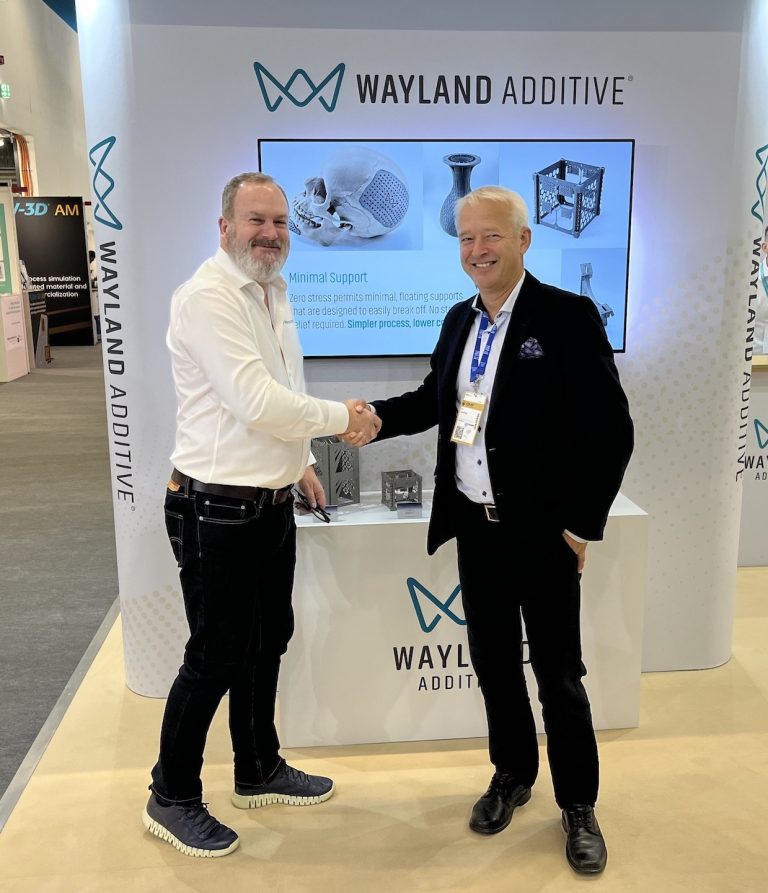
As you may have noticed, things are ramping up at Wayland Additive, and the company is excited to announce a further partnership agreement, with TECCLUSTER A/S based in Denmark.

Per Lynnerup is the Technical and Managing Director of TECCLUSTER, an engineering company with more than 30 years of experience with 3D printers and industrial 3D printing. He founded the company in 2003, however, his experience with additive technologies dates back to the very beginning, to 1989. With such impressive longevity in the AM sector comes a wealth of knowledge and expertise that Lynnerup is able to share with consistent and demonstrable successes. He has established important and valuable connections with stakeholders and allied partners across many industry sectors, supporting them to deploy additive technologies for wide ranging projects at national and international levels.

Since establishing TECCLUSTER, Lynnerup has successfully expanded its reach from the Danish market to include the whole Nordic region and the Baltics. This is the territory that TECCLUSTER will focus on in partnership with Wayland.

Commenting on the partnership agreement, Lynnerup said: “I have worked with 3D printers since 1989 and I have known Pete [Hansford] for many years. His experience in this industry is almost — ALMOST — as long as mine. What the Wayland team has achieved with the NeuBeam process is remarkable and solves many of the issues that companies using metal AM technologies face. It is particularly impressive that the Calibur3 system can deliver advanced applications in a much broader range of metal materials, including notoriously difficult materials such as Tungsten and Moly [Molybdenum] and associated alloys. Add to this the fact that parts produced by Calibur3 require only a fraction of the post processing that other metal processes require, and the Calibur3 system is a compelling solution for manufacturers with complex metal applications. I am looking forward to sharing this solution across my network.”

Peter Hansford, CRO at Wayland Additive, also commented on the partnership agreement, which was finalized at Formnext 2024: “This agreement with TECCLUSTER further demonstrates the excitement about, and the very real demand for, the capabilities of our NeuBeam process. As Per says, we have known each other for a long time, and he is one of the most knowledgeable people I know in this industry. It is brilliant that Wayland and TECCLUSTER will be working together to deliver the capabilities and the advantages of Calibur3 to a wider audience. I am delighted to be working Per and expanding machine sales across the Nordic and Baltic regions.”

www.wayland.com

https://teccluster.com

#/teccluster#.wayland.#modernplasticsindia #modernplasticsasia #modernplastics#plasticsnews#plasticsplanet #modernrecyclingindia#modernplasticsglobal#modernplasticsworld#plasticstalk#modernplasticsgermany#modernplasticsnetwork #plasticdevel

Food Vacuum System Containers use SABIC’s Circular PP with Ocean Bound Plastic Content

Food Vacuum System Containers use SABIC’s Circular PP with Ocean Bound Plastic Content

  • Certified circular SABIC PP polypropylene from advanced recycled ocean bound plastic (OBP) helps reduce marine litter and accelerate circularity.
  • Sustainable material solution from SABIC’s TRUCIRCLE portfolio meets demanding performance specifications for food contact approved vacuum containers.

SABIC, a global leader in the chemicals industry, reports that B!POD, a business unit of SAES Getters, has selected SABIC’s OBP-based polypropylene resin as the material for their containers. In close collaboration, the partners selected SABIC  PP 576P, a high-gloss grade from the company’s TRUCIRCLE  portfolio of circular resins. The container material has an OBP feedstock content in the range of 50%.

Khaled Al-Jalawi, Global Director of Circular Economy Business at SABIC, states: “We are very pleased about working with SAES Getters to help consumers meet the challenge of improving food preservation with a powerful vacuum system that uses containers molded in OBP-based SABIC PP. The decision to replace standard virgin PP by our OBP material in the containers also marks a significant step towards greater sustainability, as it supports the transformation of the plastics economy towards circularity.”

The source of the OBP in SABIC’s material is abandoned used plastic collected in regions within 50 km of shorelines and then converted to plastic feedstock by means of advanced recycling. The PP resin produced with this recycle is supplied in natural color to C.E.L. (Costruzioni Elettromeccaniche Legnaghesi), a leading Italian player specializing in the processing of thermoplastic resins. C.E.L. adds special masterbatches to mold the B!POD containers in different sizes and several distinct custom colors. At the end of their service life, the reusable containers are fully recyclable in existing PP material streams.

Ginevra della Porta, Chief Innovation Officer at SAES Getters & co-founder of B!POD, comments: “This innovation embraces sustainability from the very concept to end use – with an advanced vacuum technology to minimize food waste, with SABIC’s OBP-based material that prevents used plastic from polluting our oceans, and with containers in a range of colors each dedicated to an endangered species, such as orangutan orange or whale grey, it is designed to raise the awareness of consumers. Moreover, our market research has indicated that reusable rigid containers for food preservation can  potentially eliminate the consumption of more than 300 non-recyclable plastic bags per person and year, which corresponds to a per capita release of 30 kg of CO 2 to the atmosphere.”

The selected OPB-based SABIC PP 576P resin is a food contact approved grade, free of PFAS and BPA. It offers ease of processing and delivers dimensionally stable parts with low warpage, good impact strength and high gloss as molded. The ocean-bound plastic based solution is fully certified under the International Sustainability & Carbon Certification (ISCC) PLUS chain of custody.

www.sabic.com

#sabic.com #modernplasticsindia#modernplasticsasia #plasticsislife #plasticstalk #modernplastics#modernplasticsworld#pasticsnews #plasticsisgood#plasticsplanet#plasticsrecycling#plasticmagazine#PlasticIndustry#modernplasticsmiddleeast#indianmagazine#innovations#modernplasticsamerica#modernplasticsbangladesh #modernplasticsasia #modernplasticsitaly

Allrounder 720 E Golden Electric: Slim in design and price

Allrounder 720 E Golden Electric:  Slim in design and price

  • New: Electric Allrounder with 2,800 kN clamping force
  • Attractive: Low investment costs, short delivery times, high level of flexibility
  • Slimline: New design saves space and increases overall output

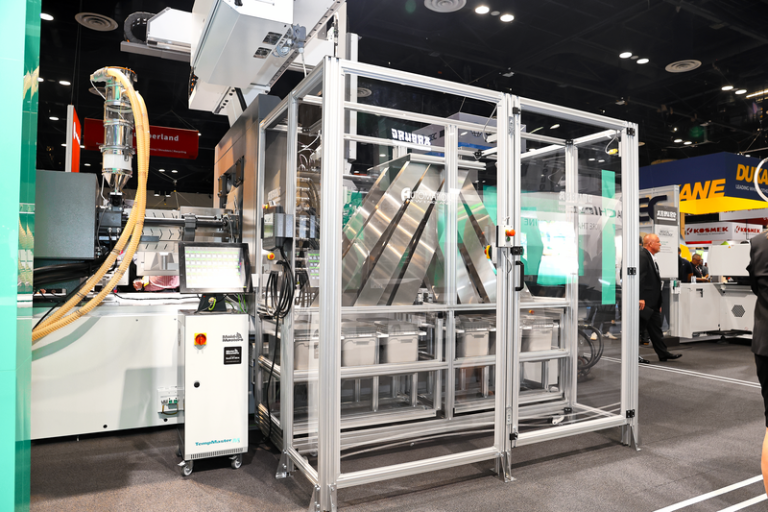
    At Fakuma 2024, an electric Allrounder 720 E Golden Electric will be producing 24 razor covers in a cycle time of 11.5 seconds.

The new Allrounder 720 E Golden Electric with a clamping force of 2,800 kN extends the product range of the electric series of the same name upwards. Its main advantages in a nutshell? A slim design with a price to match. Following its world premiere at NPE in Orlando, US, and its European premiere at Plastpol in Kielce, Poland, Arburg is now showing this machine for the first time at a trade fair in Germany at Fakuma 2024 (hall A3, stand 3101). It combines electrical precision, process stability and a small installation area with high component quality, low investment costs and short delivery times.

The extension of the electrical machine portfolio helps customers to meet current challenges such as increasing price pressure coupled with rising costs for labour, energy and materials as well as ever-shorter product life cycles and faster product changes. To enable attractive investment costs and a rapid return on investment (ROI), Arburg uses standardised equipment without compromising on quality and performance. So the new “Golden” combines a high level of precision with a slimline design at a particularly attractive price/performance ratio.

Thanks to its new design and standardised equipment, the new Allrounder 720 E Golden Electric has a particularly slimline installation area and a price to match.

Significantly smaller installation area

Arburg has optimised the design so that the new Allrounder 720 E Golden Electric, with a width of just 1,848 millimetres, has a significantly reduced installation area compared to other machines in its class. This has been achieved through features such as a new safety door with recessed handles. At the same time, the door opening has been widened to 1,400 millimetres, making the ejector area more accessible, for example. Due to its smaller installation area, the new Allrounder fits into existing production grids and lines. This is of particular interest when old machine technology needs to be replaced. However, even for new production facilities that are being planned, every achievable space saving is a valuable resource. Thanks to the slim design, more machines can be set up in injection moulding production, resulting in an increased output per square metre.

Reliable, stable machine technology

The Allrounder 720 E Golden Electric features high-quality machine technology to ensure stable and reliable plastic parts production. This includes a toggle-type clamping unit and direct drives from Arburg’s subsidiary AMKmotion. With an electric mould height adjustment system, mould installation heights of up to 800 millimetres are possible. The drive components are optimised for a clamping force of 2,800 kN. The proven high-quality Arburg plasticising with the “aXw Control ScrewPilot” ensures reproducible injection and excellent moulded part quality.

Optimised mould venting with two-stage mould locking also plays a part in this. For convenient maintenance, the new electric Allrounder has the same easily accessible control cabinet concept as the new hybrid machines. A lubrication unit and an optional pneumatic system are located on the operating side. The parts chute in the machine base has been widened, making it easily accessible.

Flexible automation and application

The new electric machine is not limited to a specific product and is quickly available, which is particularly advantageous for short-term replacement purchases and capacity expansions. It is relevant for almost every industry and of particular interest for technical injection moulding. Other typical areas of application include dimensionally stable housings for electromobility, thick-walled closures for household goods, precision components for medical technology, and the construction and leisure industries.

The Allrounder 720 E Golden Electric is equipped with the Selogica ND control system as standard. If required, additional options and functions such as core pulls and heating and cooling circuits can be easily integrated and programmed, enabling a wide range of plastic parts to be produced flexibly, efficiently and reliably.

24 razor covers in 11.5 seconds

The new electric machine can also be automated with linear Multilift robotic systems and six-axis robots from Arburg. The exhibit is equipped with a Multilift V 30. At Fakuma 2024, the Allrounder 720 E Golden Electric with a clamping force of 2,800 kN and a size 800 injection unit will be producing PP razor covers by way of example. A 24-cavity mould from Hack will be used. The cycle time is around 11.5 seconds, with each moulded part weighing 1.2 grams. The 24 finished parts are then ejected in groups of four, clustered by cavity, into six boxes.

“Smart” communication for predictive maintenance

“Smart” communication between the production cell and its centrepiece, the injection mould, using OPC UA is essential for predictive maintenance. For this purpose, the “Moldlife Sense” computer system enables sensor-controlled mould monitoring over the complete life cycle and detects changes to the mould at an early stage. The measured values from various sensors on the mould can be visualised in the machine controller. If these are outside specified tolerances, an event is automatically generated. The same applies to the indicators for the built-in acoustic emission sensors, where the “noise ID” is visualised and checked to see whether it is within the given tolerances. Individual events, such as warnings, alerts and error messages, can also be displayed in the controller and documented. This allows users to identify anomalies in the process quickly and reliably and better assess what needs to be done. In an emergency, the machine stops and issues a corresponding message so that the operator can react correctly.

www.arburg.com

#arburg#modernplasticsindia #modernplasticsasia #plasticsislife

#plasticstalk #modernplastics #modernplasticsworld #plasticsnews

#plasticsisgood #plasticsplanet #plasticsrecycling

Drinking water pressure pipes made from chemically recycled plastic installed in Vienna, Austria

Drinking water pressure pipes made from chemically recycled plastic installed in Vienna, Austria

  • Drinking water pressure pipes made from chemically recycled plastic were installed in Vienna, Austria, during June 2024
  • The initiative is the result of an all-Austrian value chain collaboration between Borealis, Pipelife, a solution brand of wienerberger, and Wiener Wasser in the spirit of EverMinds
  • The pipe polyolefin material is based on Borealis’ transformational Borcycle C chemical recycling technology

Borealis is pleased to announce the success of a value chain collaboration to develop a chemically recycled drinking water pressure pipe. Around 660 meters of polyethylene PE100-RC (crack resistant) drinking water pressure pipes based on Borealis’ transformational Borcycle  C technology platform are being laid in Vienna, marking a significant step forward on the path to a circular economy.

The installation is the result of a pilot project to help Wiener Wasser (the Vienna Water Department), increase the sustainability of its operations.

The groundbreaking initiative is the outcome of an all-Austrian partnership between Borealis, Pipelife, a solution brand of wienerberger, and Wiener Wasser—a collaboration carried out in the spirit of EverMinds, Borealis’ platform to accelerate the transition to a circular economy for plastics.

Creating drinking water pressure pipes from recycled plastic posed a significant challenge due to the high purity and quality requirements of materials used in sensitive and demanding applications. The breakthrough was made possible by Borcycle C technology, with which polyolefin-based waste is chemically recycled into new, virgin-quality plastics that are capable of meeting stringent performance standards. Mechanically recycled polyethylene and polypropylene do not yet meet the standards required for pressure pipe applications.

The specific grade, BorSafe  Bc HE3490-LS-H-90, contains over 90% chemically recycled content, based on a mass balance allocation. This enabled the project partners to avoid a lengthy revalidation and reapproval process. The integrity of the approach is verified by ISCC PLUS certification (International Sustainability & Carbon Certification), which covers the entire supply chain, from raw material to final product, guaranteeing compliance with strict sustainability standards.

“This is an excellent example of how our infrastructure pipe solutions are enabling life’s essentials,” states John Webster, Borealis Global Commercial Director Infrastructure. “We have a long track record of providing innovative and advanced pipe solutions for the global infrastructure industry. In expanding our offering to include more sustainable solutions, we’re pleased to continue this legacy.”

The project also leverages the considerable experience of Pipelife, an international manufacturer of piping solutions, which is part of wienerberger, one of the leading providers of innovative, ecological solutions for the entire building envelope in the areas of new buildings and renovations, as well as infrastructure in water and energy management. As manufacturers of the PE100-RC drinking water pressure pipes, Pipelife benefitted from the fact that Borcycle C grades are a drop-in solution, processable on existing equipment. The sustainable, leak-tight PE pipes have an expected lifespan of over 100 years, helping to mitigate the global water shortage.

“We aim to support our customers by anticipating their future needs and developing processes and products to meet them,” says Zoran Davidovski, Pipelife Head of Research & Development and Sustainability. “Integrating chemically recycled materials into our product range is a perfect example of this, and also aligns with our own commitment to advancing sustainability.”

This pilot project is intended to pave the way for future collaborations between the partners, confirming Austria’s position as a leader in sustainable innovation.

www.borealisgroup.com 

#borealisgroup#modernplasticsindia #modernplasticsasia #plasticsislife

#plasticstalk #modernplastics #modernplasticsworld #plasticsnews

#plasticsisgood #plasticsplanet #plasticsrecycling

MOL Group Signed Cooperation Agreement With the Kazakhstani National Oil Company, KazMunayGas

MOL Group Signed Cooperation Agreement With the Kazakhstani National Oil Company, KazMunayGas

MOL Group and Kazakhstani national oil company KazMunayGas (KMG) have signed today a cooperation agreement to jointly explore opportunities in the oil, gas and petrochemical sector. This agreement builds on the successful joint venture in Kazakhstan, where MOL, KMG and Sinopec from China have been producing gas and gas condensate at the Rozhkovskoye field.

Under the cooperation agreement, MOL Group and KMG expressed their desire to investigate new growth opportunities in the areas of hydrocarbon exploration and production, technology transfer, crude supply, and petrochemicals as strategic partners, advancing their relationship to a new level.

The Agreement’s key priority is the expansion of the existing exploration and production cooperation and the application of MOL technology in Kazakhstan to increase the yield of mature producing fields and the sale of produced hydrocarbons in Europe. In addition to this, the partners will seek opportunities of potential petrochemical project concepts in Kazakhstan. Also, the two companies are looking for possible import of Kazakh crude oil to Europe and Hungary.

The document was signed in Budapest by MOL Group Chairman and CEO Zsolt Hernádi and KMG Chairman of the Management Board Askhat Khassenov in the framework of the visit of the Kazakh President to Hungary.

“The agreement we signed today further strengthens our 20-years long good relationship with our partners in Kazakhstan. We have been successful in developing the Rozhkovskoye gas field and we found great expertise, friendships and possibilities in Kazakhstan. I must say that we are very much open to have more of this kind of adventures. Today’s signing opens new doors for us and we are confident we will find new projects with KazMunayGas. Here I would like to thank the support of both of our Governments to make this happen. I can promise that we at MOL are eager to boost the Kazakh-Hungarian economic relations further with new flagship projects in the energy sector.” said Zsolt Hernádi, Chairman and CEO of MOL Group. 

MOL celebrates the 20th anniversary of its presence in Kazakhstan this year. The company has so far invested around USD 200 million in the Kazakh oil sector, making it the largest Hungarian investor in the country.

KMG and MOL Group have been successfully working together in the Rozhkovskoye gas and gas-condensate field in Kazakhstan as part of the international joint venture including KMG, Kazakhstan (50%), MOL Group, Hungary (27.5%), and FIOC, China (22.5%). The field was discovered in 2008 and after exploration and appraisal, five out of nine drilled wells were successfully re-completed for production. First gas was reached in December 2023, and since then production of the wells boosted to 1.35 million cubic metres of gas per day gross, contributing by 4,43 thousand barrel per day of oil equivalent to MOL Group’s production.

The agreement signed today with KMG follows the ones MOL Group has recently signed with other strategic partners including the State Oil Company of the Republic of Azerbaijan (SOCAR) and with Turkish Petroleum Corporation (TPAO) in Türkiye.

https://molgroup.info/en

#molgroup#modernplasticsindia#modernplasticsasia #plasticsislife #plasticstalk #modernplastics#modernplasticsworld#pasticsnews #plasticsisgood#plasticsplanet#plasticsrecycling#plasticmagazine#PlasticIndustry#modernplasticsmiddleeast#indianmagazine#innovations#modernplasticsamerica#modernplasticsbangladesh #modernplasticsasia #modernplasticsitaly

LEIBINGER’s ‘Plug & Print’ promise now also applies to SAP Shop Floor environments

LEIBINGER’s ‘Plug & Print’ promise now also applies to SAP Shop Floor environments

SAP ranks among the leading ERP systems worldwide. Especially in the food and packaging sectors, SAP plays a key role in the efficient organisation of supply chain processes. As so many LEIBINGER customers come from these sectors, the industrial printer specialist will be offering SAP users even greater convenience, security and efficiency when connecting printers to SAP Shop Floor in the future.

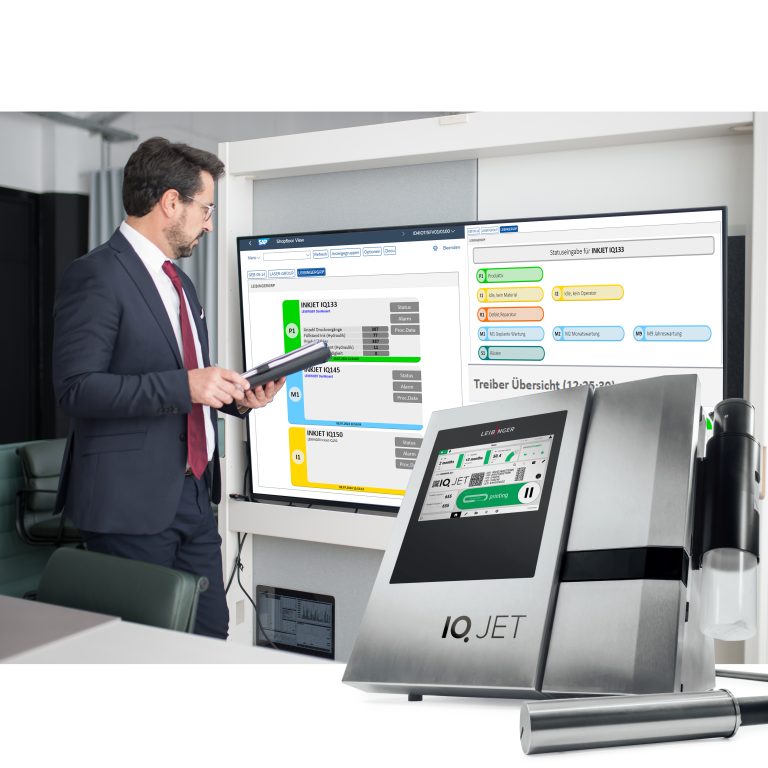
In the user-friendly SAP Shop Floor dashboard, all printer status data, error messages, and process data, including consumable levels (ink and solvent), are accessible.
Source: Paul Leibinger GmbH & Co. KG

Collaboration with 4IoT GmbH: Simple printer integration

In collaboration with the Freiburg-based SAP digitalisation experts at 4IoT GmbH, their SAP Shop Floor Connect add-on has been expanded to include a LEIBINGER printer library. This enables all LEIBINGER printers to be connected to SAP Plug & Play in a standard application. Michael Wöhrmann, Director of Business Development at LEIBINGER, is delighted with the successful integration: “This represents a significant advantage for our customers, as LEIBINGER printers can now be integrated into the SAP world much more quickly and efficiently. With this work as a foundation, essential customer printer-related business processes can be automated. All printer data and messages are directly available. For instance, automated order releases or production feedback into the SAP system are conceivable. All printer data and messages are directly available.”

Efficient dashboard for LEIBINGER customers directly in SAP

LEIBINGER customers who use SAP now benefit from a clearly organised dashboard where they can view all status data, error messages and process data, including consumables levels (ink and solvents).

Flexible interfaces: Cloud and on-premises

The interface fulfils all requirements and can be operated both in the cloud via the well-known ‘LEIBINGER Connect’ portal as well as on-premises. LEIBINGER’s latest flagship product, the IQJET, provides an OPC UA interface for the on-premises connection. This is especially interesting for sensitive industries such as semiconductors, pharmaceuticals, security and defence.

Availability and support package for Europe

Customers interested in the SAP add-on can obtain it from LEIBINGER with immediate effect. The connection of LEIBINGER printers is free of charge. If additional guidance and support is required, LEIBINGER offers a special support package in collaboration with 4IoT GmbH. This includes integration, training and extended telephone support for SAP users. The offer is initially only valid for Europe due to the binding support times.

Expert opinion

4IoT GmbH Managing Director Stefan Rössel is extremely satisfied with the integration project: “We are experts in automation, digitalisation and maximum security in the SAP environment and have extensively tested the interface. It has never been so easy, secure and reliable for SAP users to seamlessly integrate industrial printers into their SAP Shop Floor world. The collaboration with the LEIBINGER team is extremely productive for everyone involved.”

Presentation at the FACHPACK trade fair

The SAP Shop Floor integration will be presented at the upcoming FACHPACK trade fair between 24 and 26 September in Nuremberg. LEIBINGER’s motto this year is ‘The Art of Innovative Coding’. It ideally suits the 4IoT motto, ‘The Art of Smart Manufacturing’, which underscores the fine art of digital integration.

www.leibinger-group.com

#leibinger-group#modernplasticsindia #modernplasticsasia #modernplastics#plasticsnews

#plasticsplanet #modernrecyclingindia#modernplasticsglobal#modernplasticsworld

#plasticstalk#modernplasticsgermany #modernplasticsnetwork #plasticdevelopment

Borealis and E-Fuels Leader Infinium to Turn Carbon Emissions into Plastics

Borealis and E-Fuels Leader Infinium to Turn Carbon Emissions into Plastics

New Infinium eNaphtha to serve as sustainable feedstock alternative for plastics used to manufacture consumer goods

EFuels leader Infinium and Borealis, a leading supplier of advanced and sustainable plastic solutions, have entered into an agreement to enable the production of low-carbon-footprint plastics generated from waste carbon dioxide (CO2) emissions that would otherwise be released into the atmosphere. These plastics, known as polyolefins, are commonly used in manufacturing consumer goods including packaging, appliances, apparel and medical devices.

“Many people aren’t aware that countless plastics products we use every day come from fossil-based components,” said Infinium CEO Robert Schuetzle. “With Infinium eNaphtha, Borealis will create plastics with an ultra-low carbon footprint for customers and end consumers seeking more sustainable, environmentally friendly alternatives.”

As the world’s first supplier of commercial volumes of eNaphtha, a sustainable drop-in alternative to traditional fossil-based naphtha, Infinium is helping to decarbonize plastics production and reduce harmful CO2 emissions globally. Infinium eNaphtha is manufactured at the company’s Project Pathfinder facility in Corpus Christi, Texas, USA, and commercial eNaphtha volumes are being shipped to Borealis’ Porvoo facility in Finland, which provides advanced and sustainable polyolefin solutions to its manufacturing customers. The world’s first commercial eNaphtha shipment left the United States in May.

Plastics made from Infinium eNaphtha can be produced using the same facilities and manufacturing equipment and recycled in the same way as with a conventional naphtha-based product. eNaphtha produced at the Infinium Pathfinder facility has received ISCC PLUS certification from the International Sustainability and Carbon Certification (ISCC) body. This certification system ensures the traceability of the sustainably produced feedstock from its point of origin throughout the entire chain of custody.

“We are excited to be using Infinium eNaphtha to expand our portfolio of sustainable products,” said Mirjam Mayer, VP Circular Economy Solutions at Borealis. “Atmospheric carbon is a strategic element of the Borealis Circular Cascade approach to foster the transition toward greater circularity in plastics and carbon. It allows us to serve the needs of our customers while reducing their carbon footprints. Through this collaboration with Infinium, we show that atmospheric carbon, obtained by effectively capturing and storing carbon emissions in products during their lifetime, can constitute a circular building block for the future. This is one of the ways that Borealis is  reinventing essentials for sustainable living.”

The unique partnership and supply chain development between Infinium and Borealis is an example of how innovators can collaborate toward novel solutions to meet growing consumer demand for circularity and defossilization.

www.borealisgroup.com

#borealisgroup#modernplasticsindia #modernplasticsasia #modernplastics

#plasticsnews#plasticsplanet #modernrecyclingindia#modernplasticsglobal

#modernplasticsworld#plasticstalk#modernplasticsgermany

#modernplasticsnetwork #plasticdevelopment