
spot_img
Home Blog Page 23

Urgent Waste Issues Drive Strategic Talks Ahead of Major Recycling Event

Urgent Waste Issues Drive Strategic Talks Ahead of Major Recycling Event

The second roundtable series was successfully held by Media Fusion and Crain Communications on June 27 in New Delhi as the sector prepares for the Bharat Recycling Show 2025. A panel of distinguished experts and stakeholders from all around India convened for the session to discuss two urgent issues in the recycling ecosystem: end-of-life battery management and e-scrap.

The Roundtable provided an essential forum for talking about government programs, the application of policies, EPR rules, and the real-world difficulties in managing spent batteries and e-waste in a sustainable and safe manner.

The session featured participation from key voices in the sector, including L. Pugazhenthy, Executive Director of the India Lead Zinc Development Association; Satish Sinha, Associate Director at Toxics Link; Sanjeev Srivastava from NAMO eWaste; Ashok Kumar Thanikonda, Senior Program Officer, Global Green Growth Institute; Rakesh Mallick, CEO of E-Waste Recyclers India; Gautam Mehra, Chief of Innovation and R&D at OpenGate Global Enterprises; Akshit Jain, Founder of Recyclify; Preeti Tiwari, Head of Business Development EPR,  Landbell GreenForest Solutions; Pallas Chandel, Climate Change Advisor, GIZ; Mitradev Sahoo, Program Associate – Electric Mobility Sustainable Cities and Transport, WRI India; Arvind Sharma, Senior Director (IT) at the Ministry of Corporate Affairs; and Kuldeep Bartariya, Director at Shreeji Academy and Member of Vidyanjali, Ministry of Education.

The panel unanimously recognised that India’s rapid growth in digital infrastructure, electric mobility, and smartphone adoption has led to an alarming increase in e-waste and battery waste. However, this growth has not been matched with adequate systems for collection, traceability, and environmentally sound disposal.

Mr. L. Pugazhenthy, Executive Director of the India Lead Zinc Development Association, highlighted “The fragmented and largely unregulated collection of batteries in India remains a key concern. While lead-acid batteries used in vehicles and inverters are relatively traceable, dry cells, button cells, and lithium-ion batteries often end up in informal scrap channels or are improperly discarded. Weak enforcement of battery waste regulations and poor compliance by smaller manufacturers further contribute to large-scale environmental leakage.”

“The diversion of used lead batteries to the informal sector continues largely due to unchecked practices by dealers. While the Battery (Management & Handling) Rules, 2001 define responsibilities for various stakeholders, they fall short in clearly outlining obligations for dealers—giving them a virtual free hand. ILZDA has raised this regulatory gap with the CPCB, but action on the matter is still awaited.” he further added.

Mr. Satish Sinha, Associate Director, Toxics Link, echoed the concern, stating that “Despite the presence of well-framed rules, the absence of stringent enforcement, effective penalties, and coordinated monitoring continues to enable non-compliant practices.” The panelists highlighted the issue of government auctions often being accessed by intermediaries or informal players, defeating the objective of responsible recycling.

India’s e-waste management market, valued at USD 2.96 billion in 2024, is projected to reach USD 8.92 billion by 2033, growing at a robust CAGR of 12.07% from 2025 to 2033. As the third-largest producer of e-waste globally—accounting for nearly 10% of the world’s total output—India faces a pressing need for sustainable e-waste disposal. Rapid urbanization, rising electronic consumption, and increased environmental awareness are driving demand for efficient collection and recycling infrastructure, making safe e-waste management a national priority.

Ms. Preeti Tiwari, Head of Business Development EPR, Landbell GreenForest Solutions, drew attention to the 2022 Battery Waste Management Rules and emphasised that while the EPR framework is a significant move, its success depends on a well-defined reverse supply chain, ongoing monitoring, and active responsibility from manufacturers.

Mr. Gautam Mehra, Chief of Innovation and R&D, OpenGate Global Enterprises, said “Battery and e-waste recycling involves hazardous components, complex dismantling, and often lacks sufficient infrastructure. The importance of transparency, proper collection systems, and traceability, without which responsible recycling becomes extremely difficult to enforce.”

Mr. Akshit Jain, Founder of Recyclify said “The most informal recyclers, despite handling a significant volume of waste, do not disclose or document their processes, leaving major gaps in national-level data.”

Mr. Mitradev Sahoo, Program Associate – Electric Mobility, Sustainable Cities and Transport at WRI India, and Mr. Ashok Kumar Thanikonda, Senior Program Officer at the Global Green Growth Institute, shared insights on best practices from other countries in e-waste management and showcased how data plays a crucial role in driving effective solutions.

Ms. Pallas Chandel, Climate Change Advisor at GIZ, brought a unique perspective by mentioning “The rural and peri-urban regions, despite their increasing usage of electronic devices, are often left out of formal waste collection systems. In the absence of basic infrastructure, electronic waste is frequently burned, leading to severe air and water pollution.” She advocated for decentralised collection models, targeted training for informal rural workers, and a more inclusive EPR framework that extends to non-urban India.

Mr. Sanjeev Srivastava, CEO, NAMO eWaste, emphasized “The absence of financial incentives continues to be a major constraint for India’s recycling sector. Introducing targeted support for formal players can serve as a catalyst, encouraging more start-ups and MSMEs to adopt advanced technologies for critical mineral extraction. This, in turn, will pave the way for improved infrastructure, higher compliance, and a more robust circular economy.” 

The panelists collectively called for stronger rule enforcement, real-time traceability, and the integration of the informal sector into formal systems. They also recommended mandatory audits, enforcement of minimum pricing to curb undercutting, and greater public awareness. There was a clear consensus on the need to bridge regulatory and infrastructure gaps to make battery and e-waste recycling safe, traceable, and sustainable.

Bharat Recycling Show 2025, is scheduled to take place from 13 to 15 November at Hall 6, NESCO Exhibition Center, Mumbai. With a focused commodity showcase and high-level discussions, the event aims to accelerate India’s recycling ecosystem and drive long-term industry transformation.

https://www.bharatrecyclingshow.com/

#BharatRecyclingShow2025 #Modernplasticsindia #Pasticsnews
#ModernPlasticsIndiaMagazine #PrintPublication #ModernPlasticsIsrael

Smart Systems for Extrusion Sustainability Showcased at K 2025

Smart Systems for Extrusion Sustainability Showcased at K 2025

From October 15 to 19, Promix Solutions will exhibit mixing, foaming, and cooling solutions for the plastics industry at the K trade show in Düsseldorf at Hall 9, Stand E18. The Visco-P inline viscometer is used for real-time monitoring and process control, while Microcell Technology is used to save raw materials. Now, the inline viscometer can be connected to a dosing device via a closed control loop. This makes it possible to fully regulate the management of raw materials based on the viscosity measured during the production process, as in the case of controlling the IV value during PET processing.

The “Visco P” inline viscometer is now available with a complete control loop and, in combination with a dosing device, enables the control of an additive based on the viscosity measured in the production process.

Material is responsible for 80% of the CO2 footprint in extrusion. Promix is useful in this situation. By incorporating eco-friendly air gases into the polymer, Microcell Technology produces a microcellular foam structure. This results in substantial material savings by reducing the product weight by 20–50%. This lowers production costs while simultaneously safeguarding the environment.
Promix Microcell Technology works with nearly all polymers and is mostly utilized for films, sheets, foam core pipes, profiles, and cable sheathing. The use of Promix Microcell Technology is frequently encouraged by new foaming-related product attributes, such as weight reduction, enhanced heat or noise insulation, improved shock/impact absorption, light-diffusing optics, or other haptic and visual effects, in addition to the polymer savings.

At K, Promix will be showcasing relevant key components and providing information on the possibilities within the specific fields of application. One promising new field of application is the foaming of monofilaments. Promix is currently developing foamed monofilaments for artificial grass together with an industrial partner.

Microcell technology is available for both, newly planned extrusion lines and as a retrofit solution for existing lines. To date, more than 350 industrial references are on the market and various machine manufacturers are successfully integrating the technology into their lines.

Updated graphical user interface and optimized foam additives

The gas dosing system, the heart of the physical foaming process, has been equipped with a modernized graphical user interface for even easier operation. In addition, an improved grade of Procell nucleation additives is available, ensuring even finer cell structures. In higher dosages, it also acts as a foaming additive. This can be helpful in extrusion lines with very low throughputs or for preliminary testing, since additive foaming does not require any changes to the extrusion line. The experts at Promix will be happy to advise you.

The new building in Wetzlar, Germany, unites Promix Solutions’ manufacturing, assembly, design, order processing, and logistics on an area of 1,600 m².

Monitor and control raw material quality and process conditions in real time

The increasing use of recyclates and raw materials from different sources makes it more and more difficult to keep extrusion processes under control. The inline viscometer “Visco-P” measures the actual viscosity under processing conditions and in real time directly in the melt stream, without any bypass or loss of material. The maintenance-free measuring module, which is tailored to the application, homogenizes the melt without the risk of clogging, deposits or decomposition. The Visco-P is therefore ideal for recyclates as well as filled and shear-sensitive materials.

At the K trade fair, Promix will be demonstrating how Visco-P can be used to measure and control the IV value during PET extrusion. The system has a closed control loop into which a dosing device can be integrated As soon as the IV value measured in the production process falls below the target value, the software triggers the dosing of an IV enhancer until the quality of the melt has reached the desired level again. The same logic is possible in PP recycling by dosing respective chain extenders. Trend evaluations and reporting tools enable the measurement results to be recorded with statistical analysis. User-selectable limit values for the viscosity trigger an alarm and show the operator current deviations from the target value. This means that corrective measures can be taken immediately, even without a control loop.

The Visco-P inline viscometer is compatible with all common extruder types and almost all polymers and can be retrofitted to existing systems. All common interfaces are optionally available to flexibly network the new products with Industry 4.0 platforms.

www.promix-solutions.com

#promix #Modernplasticsindia #Pasticsnews #ModernPlasticsIndiaMagazine
#PrintPublication #ModernPlasticsIsrael
Challenge Yourself to Create the Next Big Thing in Printed Electronics 2026

Challenge Yourself to Create the Next Big Thing in Printed Electronics 2026

The OE-A Competition is entering its next round and invites young talent, start-ups, companies and research institutions to submit their forward-looking ideas and products in the field of flexible, organic and printed electronics. Entries are now being accepted. All projects will be presented to visitors from all over the world at LOPEC 2026 (24–26 February) in Munich. The competition is organized annually by the OE-A, the international working group for flexible, organic and printed electronics within VDMA.

“An exciting time lies ahead. We look forward to receiving creative and market-relevant projects. Every year, we are impressed by the diversity and innovative strength of the projects submitted. It’s especially rewarding to see that many of the submitted solutions focus on sustainable applications,” explains Dr. Klaus Hecker, Managing Director of OE-A. “Many of the submissions show that our technology can help create products that are more environmentally friendly across their entire life cycle – from sourcing materials to end-of-life disposal.”

Three categories, many opportunities
Participants can submit their entries in one or more of the following categories:

  • Prototypes and New Products
  • Freestyle Demonstrator
  • Best Publicly Funded Project Demonstrator

An international jury of experts from renowned companies and research institutions will evaluate the submissions. The application deadline for OE-A member companies is 26 September 2025, and the final demonstrators must be submitted by 23 January 2026.

Visibility at LOPEC 2026 – and beyond
All submitted products and projects will be presented at the OE-A booth at LOPEC 2026 – the leading international trade fair for printed electronics in Munich. The winners will receive their awards at the official LOPEC Award Show on 25 February. In addition, all participants will benefit from year-round visibility: The OE-A will present the projects on oe-a.org and accompany the presentation with targeted press relations and activities on its social media channels.

Public Choice Award and web seminar
Visitors to LOPEC will have the opportunity to vote for their favorite project on site and thus help decide the winner of the Public Choice Award. “Our stand will be a crowd puller – come by, discover the most impressive ideas and cast your vote,” invites Klaus Hecker. In addition, the OE-A will host a web seminar in April 2026, where the winners in all categories will present their projects to the international expert community. This digital format has been very popular for years and offers winners additional visibility beyond the competition and the trade show.

www.oe-a.org

#OEAAwards #Modernplasticsindia #Pasticsnews #ModernPlasticsIndiaMagazine
#PrintPublication #ModernPlasticsIsrael
New Language Alignment Brings Clarity to Tissue Sector Reporting

New Language Alignment Brings Clarity to Tissue Sector Reporting

The successful completion of a collaborative project to align terminology has been announced by Cepi, which represents the European Paper Industry, and the European Tissue Industry (ETS). The goal of the move toward uniformity and clarity in the definition of tissue products is to harmonize and streamline language for businesses along the tissue value chain as well as for analysts, consultants, and the media that cover the industry.
It is intended that all upcoming publications, standards, and reports use the new terminology by default. The recently approved vocabulary is shown alongside heritage and alternative wording in two simple infographics. One covers tissue products (completed converted items) while the other covers tissue paper (intermediate products).  They are featured on a dedicated page on the ETS website and will be actively promoted to global actors.

Cross-industry initiative brings greater clarity and supports companies, media, consultants and analysts in their reporting.

“This terminology guide was motivated by the inconsistency in tissue statistics and terminology in Europe and around the world,” explains ETS Director General, Carlos Reinoso. “It is a non-confidential resource, created to streamline communication across technical commercial and media contexts, and could not have been achieved without the close involvement of Cepi and its National Association members.”

The collaborative and transparent effort began in early 2024 with the creation of a joint Cepi-ETS task force gathering experts from leading tissue companies, national associations and the two organisations themselves. It sought to align differences in terminology that had led to confusion in reporting production and trade data. The need for clear, transparent and internationally aligned statistics to support policy, trade and sustainability had been further underlined during the COVID-19 pandemic which brought increased focus on the industry.

“The harmonisation that the new terminology introduces supports a more unified EU Single Market, at a time when there is a new push for it from EU Institutions” said Jori Ringman, Cepi Director General. “Everyone working in the sector is encouraged to adopt the harmonised terms immediately and share them with peers and colleagues. Our members will play an important role in spreading the word up and down our industry value chain, and ensuring that everyone is using the updated terms in their daily work.”

The newly harmonised framework covers several key areas including Terminology Alignment; Clarification of Product Segmentation; Customs Code Harmonisation; Trade and Production Data Improvements and Alignment with ISO 12625-1:2019.

We will now be working in coordination with our counterparts around the world including AF&PA in the US, FPAC in Canada, CNHPIA in China and JPA in Japan to promote this harmonised framework internationally to support global statistical alignment and trade transparency,” concluded Carlos Reinoso.

www.europeantissue.com

#europeantissue #Modernplasticsindia #Pasticsnews #ModernPlasticsIndiaMagazine
#PrintPublication #ModernPlasticsIsrael
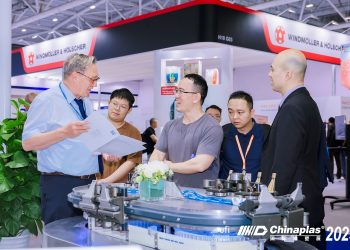
Breakthrough in Mould Insert Coding Ensures Repeatability and Speed

Breakthrough in Mould Insert Coding Ensures Repeatability and Speed

With the new InsertKey Z088/…, HASCO introduces an innovative solution for the clear and unambiguous coding of mould inserts in injection moulding tools — a practical answer to one of the industry’s ongoing challenges. This new system, comprising the sleeve Z0881/… and the bush Z0882/…, reliably ensures that mould inserts can only be installed in one correct position. This not only eliminates the risk of insert mix-ups but also streamlines production workflows and boosts confidence in mould assembly processes.

One of the standout advantages of the InsertKey system is its contribution to process reliability, operational efficiency, and greater standardization in modern mouldmaking. By ensuring that every insert is precisely and consistently positioned, manufacturers can significantly reduce human error during assembly and maintenance. This is especially valuable for companies working with high-cavity tools or multi-variant inserts, where even minor mistakes can lead to costly downtime or defective parts.

The InsertKey’s design cleverly enables the identical, repeatable production of mould inserts. Tasks such as work preparation, storage management for spare parts, and regular maintenance routines all benefit from this standardization — reducing lead times, optimizing inventory, and supporting lean manufacturing goals.

The system’s clever coding method is based on specific rotation within the installation space. Depending on the mould concept, only a single code in the mould frame plate is needed for each insert, with the InsertKey automatically positioning each one correctly. This intuitive approach removes the need for additional markings or manual alignment, saving time on the shop floor while providing robust process security.

Its scalability is another important advantage: by using two InsertKey units, each with eight unique rotational positions, mouldmakers can create up to 64 clearly defined coding combinations (8²). This means the system can easily accommodate a wide variety of tool layouts and cavity numbers, providing maximum flexibility while maintaining a compact footprint. The InsertKey requires no additional installation space or protruding parts, allowing seamless integration even in tight tool designs.

Beyond its technical features, the InsertKey is a practical extension of HASCO’s commitment to delivering standardized, user-friendly solutions that add real value. For toolmakers and processors alike, it means faster set-ups, fewer errors, more reliable spare parts management, and simpler maintenance — all contributing to lower operating costs and improved overall efficiency.

With the launch of the InsertKey, HASCO continues to strengthen its position as a trusted partner for precision mould components. This system is yet another step towards the company’s goal of enabling more efficient, reliable, and future-ready injection moulding processes through smart, practice-oriented innovations that respond directly to the everyday needs of the mouldmaking industry.

www.hasco.com

#hasco #Modernplasticsindia #Pasticsnews #ModernPlasticsIndiaMagazine
#PrintPublication #ModernPlasticsIsrael

Cloud Based Platforms Enable Secure, Transparent Extruder Performance Tracking

Cloud Based Platforms Enable Secure, Transparent Extruder Performance Tracking

The Coperion C-BEYOND digital platform has been used by Remscheid, Germany-based masterbatch maker colorplasticchemie Albert Schleberger GmbH (cpc) to improve its ZSK twin screw extruders, ensuring long-term optimal efficiency for both the extruders and the entire production process. This technology logs every ZSK extruder’s operating parameters at CPC in a cloud, making them instantly accessible for insightful analysis.

The OEE (Overall Equipment Effectiveness) value of each ZSK extruder as well as the plant as a whole can be found at any time using C-BEYOND. Additionally, the cpc platform supports order planning. Real-time production amount data is accessible. C-BEYOND allows for detailed documentation of the production process and optimal scheduling of maintenance tasks. Furthermore, C-BEYOND computes CO2 emissions and energy usage per kilogram of masterbatch generated. The information it captures greatly speeds up and improves Coperion’s remote servicing effectiveness.

The C-BEYOND digital service platform is an important component of cpc’s production planning. At any time, ZSK extruder operating personnel can enter data on the production status to the system.

OEE dashboard: clear overview of extruder performance

“We produce exclusively tailor-made products for our customers on our ZSK extruders. Production quantities from 25 kg on up are possible. Within a single day, the masterbatch recipes have to be changed frequently. And precisely for this reason, forward-looking order planning and the shortest possible machine downtimes between tasks are critical for our production efficiency – and for our success,” according to Rüdiger Kaczka, Plant Manager at cpc.

By upgrading its ZSK twin screw extruders with the C-BEYOND platform, cpc has taken an important step towards increasing its overall production efficiency.

The heart of C-BEYOND is an all-encompassing data platform that enables valuable analysis of production processes. At any time, cpc can access all production data from its ZSK lines instantly and transparently. Customizable dashboards summarize all plant efficiency data and visualize it in reliable, user-friendly analytical diagrams. Key production indicators (KPIs) for each line, including availability, production quantity and product quality, are easily accessible at a glance. This enables the seamless operation of machines and allows for the identification of trends, which can be leveraged to implement optimization measures.

“In the past, we often pulled together various statistics, calculation tools and our years of experience in order to make production-related decisions. With C-BEYOND, we can access valid data in one place that gives us the certainty that we are on the right track,” Kaczka said enthusiastically.

Order planning: live view and downtime tracking for high efficiency

A look at production planning demonstrates how cpc integrates the C-BEYOND service platform into its workflow and profits from it. Especially in the case of frequent order changes, it is crucial for the entire plant’s efficiency that extruders do not stand idle unnecessarily, or are warmed up without producing anything. Using C-BEYOND, cpc can see precisely when an order will be finished on every one of the ZSK extruders, and can promptly initiate preparations for the following order, ensuring seamless transfers between tasks and full exploitation of every machine.

With C-BEYOND, important ZSK extruder performance markers, such as availability, production quantity and product quality, are determined in real time and visualized in user-friendly OEE analysis diagrams.

C-BEYOND automatically accounts for production interruptions due to recipe changes, maintenance tasks, or other operational downtimes, providing the operational personnel the option to add additional useful information via tablets installed at the extruder. This downtime tracking enables evaluations over longer time periods, which in turn can reveal informative trends, allowing for implementation of measures to increase efficiency in the future. The system continuously documents which order was produced on which extruder, making the production process visible in detail. This data is helpful for claim management and can be used to optimize subsequent orders.

In case of machine breakdown or deviations in the operating window, C-BEYOND can automatically notify management and operating personnel, enabling even faster reactions.

Sustain app: for less energy consumption 

“We take our responsibility for humanity and the environment very seriously”, said Alexander Schleberger, Managing Director of cpc. “For that reason, we use the Sustain app with the energy monitoring function to capture precise real-time information about our extruders’ energy consumption and individual aggregates such as motors, feeders or barrels. On this basis, we identify components and processes that consume a lot of energy and implement data-supported optimization measures.”

If all production lines are integrated into the system, C-BEYOND can capture and monitor energy consumption across the entire facility. Inefficient equipment or even energy waste can be reduced to an absolute minimum so that valuable resources are used exclusively in a targeted manner and a strategic plan for optimal energy use is possible.

“We are supporting cpc by connecting the ZSK extruders to C-BEYOND in order to structure production processes and the machines’ capacity more transparently, increasing efficiency in operation. For us, cpc’s digitization initiative confirms the added value that C-BEYOND can offer. We are convinced that will be a groundbreaking tool in the long term, helping customers achieve increases in productivity and sustainability. It makes us very proud to be able to travel this path together with cpc, and we look forward to continuing our collaboration,” said Markus Schmudde, Head of Research & Development, Compounding & Extrusion at Coperion.

www.coperion.com

#Coperion #Modernplasticsindia #Pasticsnews #ModernPlasticsIndiaMagazine
#PrintPublication #ModernPlasticsIsrael

Digital Edge and Green Engineering Raise Bar for Manufacturing Excellence

Digital Edge and Green Engineering Raise Bar for Manufacturing Excellence

The Greenline concept for BO systems aims to maximize efficiency. The core elements are

  • Solutions for PCR use: After years of R&D projects, with the aim of significantly increasing the proportion of recycled polypropylene in the production process for BOPP films, a milestone has been reached in close cooperation with the entire value chain to further close the loop for BOPP films.
  • Direct fluff dosing: Higher production/material efficiency with an advanced solution to increase direct fluff dosing. New software solutions now allow the maximum possible amount of production waste to be fed inline into the BO process at any given time. This also reduces energy consumption as this waste does not have to be re-granulat
  • Heat recovery unit 2.0: This solution maximizes energy efficiency and significantly reduces operating costs by capturing and reusing waste heat more effectively than ever before. The energy-rich exhaust air is fed into the heat recovery unit, where thermal energy is transferred to the fresh air drawn in via a special heat transfer medium.
  • Exhaust air purification system integrated into the BO process from a single source and ideally coordinated. In the first stage, the exhaust air is cleaned using a scrubber; in the second stage, gaseous hydrocarbons are separated from the exhaust air using an electrostatic precipitator.
  • High-temperature heat pump to improve waste heat recovery. This patented solution uses waste heat after passive heat recovery at a low energy level and raises it to a usable energy level. This reduces operating costs and significantly improves the CO2 balance.
  • 12m line concept: Increased productivity and efficiency for the lowest specific energy consumption.

Digitalization: Standard Data Interface (SDI)

Plug-and-play connection of Brückner stretching lines to the customer’s own IT systems. The benefits:

  • Seamless integration of plant data into customer systems such as dashboards, production planning or ERP using a simple and efficient connection.
  • Reduced complexity thanks to simplified IT architecture with just a single interface to all relevant data from a Brückner film stretching line.
  • Fast implementation of data and protocols by using the OPC UA standard.
  • High reliability: Elimination of potential sources of error by standardizing the protocol and the data read out.
  • Availability for every stretching line generation: Simple upgrade for older lines by Brückner Servtec.
  • The standard also allows the connection of lines from other manufacturers.

New solutions for the production of technical films

  • Lines for battery separator films with 8.7 m usable film width: the widest separator film lines in the world with an annual output of up to 500 million m² and with consistent film quality
  • Sequential and simultaneous lines for capacitor films and current collector films with a line width of up to 8.4 m for EV applications or films with high energy density for renewable energy applications in the energy industry
  • Extremely thin films down to 2 microns

Future. Made by Brückner Group

As part of a world-leading group of companies, Brückner Maschinenbau builds on a strong foundation of shared expertise and innovation. United by a common vision, the Brückner Group aims to shape global markets and the future of plastic and material processing with sustainable solutions – flexible, fast and customer-focused. To make this shared purpose tangible, the Group and its business units will be represented together at a joint stand for the first time. This presence offers customers and stakeholders the opportunity to experience the combined strength of leading global companies in the fields of plastics and alternatives, packaging and technical applications, machinery and production plants, as well as holistic solution providing.

Each business unit contributes cutting-edge technologies for future-oriented markets that embody the Brückner Group’s collective commitment to sustainability, digitalization, and technological leadership. From more efficient production technologies and smart automation to new packaging approaches and digital interfaces – these developments reflect the shared drive to lead with purpose.

Together, they stand for collaboration, excellence, and a bold vision: shaping the industry of today and tomorrow.

https://www.brueckner-maschinenbau.com/

#brueckner-maschinenbau #Modernplasticsindia #Pasticsnews
#ModernPlasticsIndiaMagazine #PrintPublication #ModernPlasticsIsrael

Digital and Flexo Technologies Push Label Printing Closer to Broader Packaging Applications

Digital and Flexo Technologies Push Label Printing Closer to Broader Packaging Applications

Comexi, a world leader in printing and converting solutions for flexible packaging, is expected to make a big effect at LabelExpo Europe 2025, which will be held in Barcelona from September 16–19. The company will launch a new technology solution from booth 5G73 that pushes the limits of label printing and conversion—faster, more customized, and more environmentally friendly. Comexi is the only business in the industry that provides flexible packaging and label printing solutions in offset, flexography, and digital formats, customizing technology to meet the unique requirements of each client.

The new Comexi D4 digital press, which is intended to unleash unrestrained creativity, is at the center of this revolution. This technology reduces time to market significantly by doing away with the need for plates and allowing for real-time design adjustments, making it perfect for small batches and fully bespoke designs. Because of its versatility, label creation is redefined for brands that require distinction and immediacy.

Another key innovation is the Digiflex digital press, specializing in variable code printing for critical applications such as traceability, brand protection, and advanced personalization with QR or data matrix codes. It is a strategic tool for brands seeking smart, secure consumer engagement.

Comexi also reinforces its leadership in central drum offset printing with the Comexi CI Offset evolution—a perfect solution for multiple SKUs and short runs that combines outstanding quality with a strong environmental commitment. The technology reduces solvent use and minimizes emissions, providing a highly sustainable alternative for an increasingly demanding market.

In the field of slitting, Comexi will showcase its turret slitter rewinders S1DT and S2DT, capable of slitting reels from 30 mm and integrating with fully automated end-of-line systems. These solutions maximize productivity and meet the growing need for efficiency and precision in label converting.

F4 Origin: A New Generation of Compact Flexographic Presses

Innovation continues with the premiere of the Comexi F4 Origin, the fourth generation of an iconic model introduced in 2010. Since then, Comexi has sold over 100 units of the F4 in its previous three versions, cementing its place as one of the most successful compact presses on the market. This new version maintains the essence of its predecessors—compact format, agility, and versatility—but takes a qualitative leap in performance, efficiency, and sustainability.

Designed for flexible small-format productions, the new F4 Origin now reaches speeds of up to 400 m/min and a maximum width of 1,120 mm, thanks to a fully reinforced mechanical structure. It incorporates the GeniusRun system to eliminate bouncing, ensuring exceptional print quality even at minimum formats of 240 mm.

Additionally, the GeniusDry drying system has been optimized to work with both solvent- based and water-based inks, further supporting sustainability. This redesigned system also brings major energy efficiency improvements by minimizing temperature loss and optimizing airflow between colors to reduce circulating air volume.

In line with Comexi’s more advanced models such as the F2 Origin and F1 Evolution, the F4 Origin now integrates the control console into the machine, reducing the footprint and improving usability. The upper walkway and access points have also been completely redesigned, significantly enhancing ergonomics—making it easier for operators to access the drying tunnel, central drum, video system, and threading, while also facilitating maintenance.

This new generation is ideal not only for short-run flexible packaging but also for the label sector, whose production needs often align with flexographic technologies. Its 240 mm minimum format enables jobs to be printed without duplicating plates, and its compact size makes it a perfect choice for label printers looking to expand into flexible packaging. With this machine, it’s possible to transition from printing a label for a glass or PET bottle to formats such as recyclable monomaterial stand-up pouches, opening up new market opportunities for brands focused on sustainability and diversification.

A day of Networking and Live Demonstrations to Expand to new markets

To experience all these solutions firsthand, Comexi invites its customers to visit its Technological Center at headquarters in Girona on September 15. The company will host a special presentation of the F1 Evolution, its most advanced flexo press. Three live demos will showcase the machine’s capabilities: a solventless job printed at maximum speed with no bounce, a high-definition design using water-based inks, and a third demo with electron beam technology—highlighting how innovation and sustainability go hand in hand.

www.comexi.com

#comexi #Modernplasticsindia #Pasticsnews #ModernPlasticsIndiaMagazine
#PrintPublication #ModernPlasticsIsrael

Top Circular Economy Conference Set to Expand Impact in March 2026

Top Circular Economy Conference Set to Expand Impact in March 2026

After its grand premiere in March 2025, the planning is now underway for the next Circular Valley Convention (CVC). On March 11 and 12, 2026, the legendary Areal Böhler in Düsseldorf will again become a buzzing hub of experts and thought leaders from business, science, policy, and civil society who share a common objective: accelerating the global transformation towards a genuinely circular economy.
The CVC is already established as one of Europe’s most progressive events for the circular economy, convening the most influential stakeholders who understand that the future of sustainable development lies in reimagining the way resources are used, reused, and recovered. Riding on the success of its first year, next year’s edition will further broaden its scope and influence by highlighting the newest innovations and strengthening connections between sectors and fields.

The core idea behind the Circular Valley Convention is to bridge vision with action. It combines a high-level conference program with an interactive exhibition and curated networking opportunities that encourage meaningful dialogue, practical learning, and concrete partnerships. Attendees can expect an atmosphere where leading researchers, policymakers, corporate leaders, startups, and community pioneers come together not just to talk about circularity — but to demonstrate real-world solutions that can be implemented at scale.

During the first iteration of Circular Valley Convention 2025, attendees learned from global experts and thought leaders on stage. Visionary approaches and breakthroughs were discussed throughout all five stages of the product lifecycle and materials — from sustainable design fundamentals and regenerative material selection to digital tracing and advanced recycling technologies. Over 200 visionaries, such as Prof. Holger Hanselka (Fraunhofer), Katja Busch (DHL), Ulrike Sapiro (Henkel), and Prof. André Bardow (ETH Zurich), connected with a varied crowd of attendees via motivating keynotes, interactive panels, and detailed masterclasses on three specialized stages.

For 2026, the CVC will double up on its vision to be the world’s top international trade fair and knowledge leadership platform for the circular economy. The expo floor will expand into an even fuller marketplace for advanced circular solutions, with everything from new materials and modular product design to intelligent reverse logistics systems and fresh business models for reuse and remanufacturing. This interactive space will allow people to experience how cross-sector collaboration can speed up systemic change.

Yet another characteristic of the Circular Valley Convention is its focus on effective networking. Since a circular economy cannot be successful in silos, the event will further enable connections that cut across value chains and geography. Startups will get to interact with potential partners and investors, researchers will get a chance to meet practitioners directly, and policymakers will learn from the experience of actual pilots and market leaders.

A key strength of the CVC is its close ties to the broader Circular Valley ecosystem — an internationally recognized initiative based in Germany’s Rhine-Ruhr region that brings together companies, research institutions, and policymakers to pilot scalable circular economy projects. By rooting the convention within this ecosystem, the CVC ensures that insights and partnerships formed at the event can translate into practical, impactful action long after the expo halls close.

As the world races to reduce waste, conserve finite resources, and cut carbon emissions, gatherings like the Circular Valley Convention play a critical role in aligning goals, standards, and best practices across borders. The 2026 edition will place an even stronger spotlight on collaborative innovation — showcasing success stories that span industries such as packaging, textiles, construction, electronics, and mobility. Attendees will gain practical ideas for integrating circularity into product design, supply chains, business models, and consumer engagement.

Save the Date: March 11–12, 2026 at Areal Böhler in Düsseldorf. Whether you’re a corporate sustainability leader, a researcher breaking new ground in materials science, a policymaker drafting circular economy frameworks, or an entrepreneur developing circular business models, the Circular Valley Convention promises to be a dynamic hub of solutions, inspiration, and connections for everyone ready to shape the circular future.

https://cvc-duesseldorf.com/

#CVC2026 #Modernplasticsindia #Pasticsnews #ModernPlasticsIndiaMagazine
#PrintPublication #ModernPlasticsIsrael

Strategic Expansion into Africa Unlocks Major B2B Collaborations

Strategic Expansion into Africa Unlocks Major B2B Collaborations

Think Plastic Brazil, a portfolio of solutions for the plastic-converted products sector in the process of internationalizing to target markets, hosted a business mission to South Africa from June 17 to 20, 2025, bringing together 21 Brazilian companies for business meetings as part of its strategy to strengthen trade relations with the African continent. This initiative was carried out through a partnership between ApexBrasil (Brazilian Trade and Investment Promotion Agency) and INP (Brazilian Plastics Institute). The mission directly earned US$910,000 in revenue, with an additional US$5 million anticipated over the next 12 months.

Think Plastic Brazil at the Brazilian Embassy in South Africa Photo: Think Plastic Brazil

The African markets occupy a strategic position in the process of geographic diversification of exports in the converted plastics sector. Currently, more than 95% of exports are concentrated in the Americas, which represents a structural risk in terms of regional dependence. In this context, Africa emerges as a promising frontier, with concrete opportunities for commercial integration due to its young population, accelerated growth, and increased demand for manufactured products. From a strategic perspective, the African continent represents, for the companies supported by the Think Plastic Brazil Portfolio, what Latin America represented in previous decades: a growing market with strong potential for medium- and long-term relationships,” explains Carlos Moreira, INP Executive Director and Think Plastic Brazil CPO.

Throughout the event, 255 business meetings were held with 251 new contacts from eight countries: South Africa, Angola, Botswana, Mozambique, Namibia, Kenya, Zambia, and Zimbabwe. The participating Brazilian companies are from the housewares, construction, toys and childcare, and plastics industries.

During the mission, technical visits were made to Big 5 companies and retail stores in the housewares sector, where the Brazilian companies held meetings with their management. Carlos Moreira, INP Executive Director and Think Plastic Brazil CPO, and our market specialists, Daniela Ornelas and Cristina Sacramento, also accompanied the group of companies on guided tours, in stores, and at a large distributor of hardware and agribusiness supplies operating in South Africa and the sub-Saharan region.

Business round at Mission-Africa photo: Think Plastic Brazil

Finally, the team, composed of Carlos Moreira, Daniela Ornelas, and Cristina Sacramento, was welcomed at the Brazilian Embassy in South Africa by Benedicto Fonseca Filho, Brazilian Ambassador to Pretoria; Carlos Vitor Müller, Agricultural Attaché; and Bruno Leite, diplomat. During the visit, they discussed the upcoming Mission to the region in 2026, the potential of the sector as the fifth largest in the world, and the importance of investing in innovation, design, and sustainability. They also presented the Color Trend 2026, a guide to colors and trends in plastics, and the International Yearbook 2025, an updated catalog of Brazilian companies that brings together Think Plastic Brazil members in the converted plastics sector and is an excellent showcase for buyers and partners.

WEBINAR

Think Plastic Brazil will host the webinar “Eyes on Africa: What We Experienced and Learned at the Africa Trade Mission” on July 17th, from 3:00 PM to 5:00 PM, on the Teams platform. The objective of the virtual meeting is to present the main results, lessons learned, and challenges overcome by the companies that participated in the Africa Trade Mission, to provide insights into the business potential of the African continent, market profiles, and future opportunities for Brazilian companies. It will also include an interactive session to answer questions with experts and representatives of the companies that participated in the mission.

https://thinkplasticbrazil.com/

#thinkplasticbrazil #Modernplasticsindia #Pasticsnews #ModernPlasticsIndiaMagazine
#PrintPublication #ModernPlasticsIsrael