Lindner Washtech announces a new partnership with Srichakra Polyplast, one of India’s leading plastics recyclers, for the supply of two advanced washing lines for processing post-consumer recycled (PCR) film and rigid plastic waste. The investment supports Srichakra Polyplast’s continued expansion in high-quality plastics recycling and reinforces both companies’ commitment to advancing circular economy solutions. The new systems will enable the production of premium-quality recyclates for demanding applications and support the growing demand for sustainable plastic solutions in India and beyond.
Srichakra Polyplast is recognized as one of the most respected recycling companies in India and across Asia. As the operator of India’s first food-grade rPET recycling facility and one of the largest producers of food-grade rPET and rHDPE materials in the region, the company supports leading beverage and FMCG brands by collecting post-consumer packaging waste and transforming it into high-quality recycled materials. Through its integrated operations and control across the value chain, Srichakra Polyplast helps customers reduce virgin plastic consumption and achieve their sustainability targets at scale.
Marcel Willberg, Managing Director – Lindner Washtech; Ganesh Karankal, Director India – Lindner Washtech; Mr. Ravindra Venkata Paruchuri, Co-founder & Managing Director – Srichakra Polyplast; Ritesh Nagrale, Technical Director – Srichakra Polyplast; Pravin Nagrale, Business Head – Srichakra Polyplast; Georg Krenn, Managing Director – Lindner Washtech. (From Left to Right)
“We sincerely thank Mr. Ravindra and the entire Srichakra Polyplast team for placing their trust in Lindner Washtech. Their commitment to innovation, quality, and sustainability aligns perfectly with our vision for the future of plastics recycling. We are proud to be part of this exciting greenfield project and look forward to a long and successful partnership,” said Ganesh Karankal, Director India, Lindner Washtech.
“Choosing the right technology partner is critical for a project of this scale. After a comprehensive technical and commercial evaluation, we selected Lindner Washtech because of its outstanding technology, process expertise, and proven ability to deliver premium-quality recyclates, said Mr. Ravindra Venkata Paruchuri, Co-founder & Managing Director of Strichakra Polyplast “Their strong track record, innovative solutions, and extensive experience in advanced plastics recycling gave us the confidence that they are the right partner for our growth journey.”
An equally important factor was the strong local presence and support provided by the Lindner India team. Having experienced professionals available locally for project execution, technical assistance, and after-sales support provided additional confidence in achieving operational and quality objectives.
“As we continue to expand our recycling capabilities and support global brands with sustainable packaging solutions, we look forward to building a long-term partnership with Lindner Washtech and setting new benchmarks for high-quality recycling in India and beyond,” added Mr. Ravindra Venkata Paruchuri.
The partnership represents a significant step toward increasing the availability of high-quality recycled plastics in India and the wider Asian market. By combining Srichakra Polyplast’s recycling expertise with Lindner Washtech’s proven washing technology, both companies aim to raise industry standards for recycled material quality, operational excellence, and circular economy performance.
As a long-term technology partner, Lindner Washtech remains committed to supporting Srichakra Polyplast throughout the project lifecycle and contributing to the company’s continued growth and leadership in sustainable plastics recycling.
Molecor Steps Up Efforts to Reduce Plastic Particles in Marine Environments
On the occasion of World Oceans Day , celebrated every June 8, Molecor reaffirms its commitment to ocean protection through the responsible management of microplastic waste generated by its operations. This commitment is driven by the consolidation of the voluntary Operation Clean Sweep (OCS) program across all its production facilities in Spain, an approach that strengthens prevention at the source.
The company continues to hold OCS Europe certification at all its plants and remains a benchmark in the sector for preventing unintentional losses to the environment. During 2025, Molecor further strengthened its environmental and ecosystem protection
practices, achieving a 10.3% reduction in the microplastic waste generated and significantly improving the control of potential losses to the environment. This progress is supported by the continuous optimization of operational processes and procedures, together with the implementation of increasingly effective preventive and mitigation measures throughout the entire production process.
As part of this commitment, the company has advanced the digitalization of its monitoring and control system, incorporating tools that enhance traceability and improve response capacity to any potential risks. In addition, Molecor continues to promote specialized training for its teams on best practices in handling materials, loss prevention, and incident response, as well as awareness-raising initiatives aimed at fostering a corporate culture based on prevention and continuous improvement.
The organization’s commitment to preventing microplastic pollution has led the company to place particular emphasis on the implementation and certification of the Operation Clean Sweep (OCS) program. Thanks to this approach, Molecor has anticipated new European legislative requirements in this field, such as the REACH restriction established under Regulation (EU) 2023/2055 on intentionally added microplastics and Regulation (EU) 2025/2365 on the prevention of plastic pellet losses to the environment, strengthening its position as a leading company in the sector. This proactive stance enables the company to address key requirements in advance, including loss prevention, operational control, risk assessment at critical points, and staff training throughout the value chain. Molecor stands out for applying advanced methodologies such as Bowtie analysis for loss estimation, anticipating future harmonized calculation requirements and reinforcing the control of microplastic emissions into the environment.
Overall, this approach strengthens Molecor’s contribution to the Sustainable Development Goals, particularly SDG 14 “Life Below Water” and SDG 15 “Life on Land,” demonstrating a firm and sustained commitment to ocean protection. In this way, the company positions itself not only as an industrial benchmark within the sector but also as an active player in the fight against microplastic pollution, promoting solutions that contribute to the long-term preservation of ecosystems.
ENGEL At Plast 2026: Transforming Plastics Manufacturing Through Advanced Technologies And AI
At Plast, visitors will be able to test the performance of the ENGEL autonomous production cell live through dedicated sessions and one-to-one meetings with an ENGEL Italy Master Trainer.
At Plast 2026, ENGEL presents innovation as a dialogue with industry: not only technologies, but an integrated ecosystem of solutions, digital assistants, AI-based systems and automation designed to deliver value, efficiency and quality across manufacturing processes. For injection moulders, this means solutions that help stabilise production, reduce scrap, make better use of available resources and improve cost efficiency across a broad range of applications.
Today, in injection moulding, the real challenge is no longer just to produce, but to do so efficiently, while maintaining consistent quality and full cost control, even in the presence of increasingly complex variables. From automotive to medical, from packaging to technical moulding, companies are seeking solutions capable of transforming this complexity into measurable results. In this context, for ENGEL, innovation goes beyond technology: it becomes a language, a way to interpret industry needs and engage with an ever-evolving production environment to create tangible added value.
With this approach, ENGEL is showcasing at Plast 2026 a coherent pathway that brings together vision, application and accessibility to technology.
An ecosystem taking shape: the Expert Corner “Your Industry. Our Solutions”
At the heart of the booth, the Expert Corner “Your Industry. Our Solutions” embodies the synthesis of this approach. ENGEL’s technological offering takes the form of a broad and multifaceted ecosystem, one that cannot be fully represented within the confines of a trade show. From this awareness comes a space that goes beyond the traditional exhibition concept, positioning itself instead as a guided gateway to expertise, applications and production scenarios.
Rotor blades for drones made of carbon-fibre-reinforced composite, produced using tape-sandwich injection moulding technology.
Through a focused selection of real cases and application configurations, visitors are taken inside the processes, gaining a clear understanding of how machines, automation and digital intelligence interact to deliver consistent and measurable results. For processors, the Expert Corner provides direct access to application know-how that can be transferred to their own production environment, helping them identify suitable production solutions, automation strategies and digital tools for improving efficiency, quality and process stability. One key principle stands out: value does not lie in individual technologies, but in the ability to orchestrate them with a clear focus on outcomes. This is where innovation becomes a method, and method ultimately drives performance.
Advanced process control: the role of intelligent assistants
Within this technological ecosystem, process control is one of the areas where innovation takes its most tangible form. Every project shown in the Expert Corner is built on an integrated optimization approach that involves the entire production system, from plant design through to the dynamic management of process parameters, entrusted to the digital assistants within the inject AI framework.
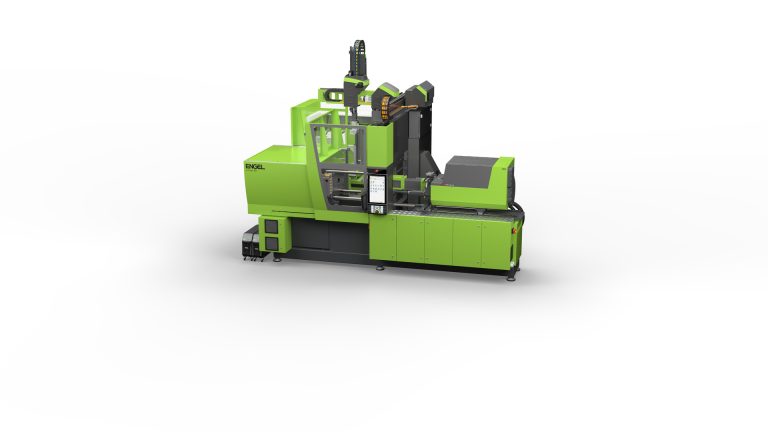
Injection moulding cell with tie-bar-less ENGEL victory and easix six-axis robot – basis of the fully automated production solution for thermoplastic composite rotor blades (front view).
Digitalisation thus becomes a true enabler, simplifying machine operation while at the same time extending its performance capabilities. Intelligent assistants act directly and automatically on the process. iQ weight control helps maintain consistent part quality by compensating for material and viscosity fluctuations within the same shot, which can lead to 85% less weight dispersion. iQ clamp control automatically optimises clamping force, reducing energy consumption by up to 10% in force build-up and protecting the mould. iQ flow control stabilises mould temperature control, supporting reproducible thermal conditions and achieving energy savings of up to 18% in production.
They are complemented by iQ process observer, which analyzes more than 1,000 parameters, detects deviations in real time and recommends corrective actions which helps avoid scrap. A system that does not simply react but anticipates critical issues and proactively supports operational decision-making.
The most advanced expression of this philosophy is the first autonomous injection moulding machine, already unveiled at K 2025 and now on display at Plast 2026.
Artificial intelligence drives the process
Automated handling in the mould area: precise process steps directly in the injection mould.
Based on an all-electric e-mac 80, the autonomous production cell marks a significant step forward: the system no longer simply provides support, but actively governs the process, adapting in real time to changing production conditions. Further enhancing the effectiveness and responsiveness of human–machine interaction is ENGEL Virtual Assistant (EVA), an AI-based digital assistant that supports process engineers and operators at every stage of their work. EVA recommends the appropriate actions, provides step-by-step troubleshooting guidance and enables immediate access to technical information. For production teams, this means faster troubleshooting, shorter downtimes and easier access to expert knowledge, particularly when experienced personnel are not immediately available on the shopfloor. It is not just a chatbot, but an extension of expertise, knowledge made accessible, instant and shared.
Within this framework, injection moulding evolves from a process requiring constant monitoring into a self-regulating system. The operator defines the quality requirements, while the machine automatically adjusts the parameters to ensure they are consistently met, reducing scrap, energy consumption and set-up times. The result is a new balance between human expertise and digital intelligence, where resources can focus on higher value-added activities.
From technology to first-hand experience
Experiencing this transformation live means fully understanding what injection moulding can achieve today. For this reason, at the booth, an ENGEL Italy Master Trainer will host scheduled sessions as well as tailored one-to-one meetings dedicated to the digital assistants of the inject AI framework, offering the opportunity to explore applications in depth, discuss real-world cases and discover how to immediately translate these advantages into their own production environment. This gives visitors a practical basis for assessing where digital assistance can reduce operator workload, improve process stability or support faster troubleshooting in their own plants.
Within the booth, the innovation pathway is further demonstrated through two fully automated production cells, designed to translate the principles outlined so far into concrete applications. The first one is dedicated to lightweight design, featuring a system for manufacturing rotor blades for drones made of thermoplastic composites using tape-sandwich technology. This application brings together several key aspects: the production of high-performance components, integrated noise reduction and sustainability. Life cycle analyses have demonstrated a significant reduction in CO₂ footprint compared to conventional processes based on thermoset materials. The NeoBlade project is funded by the Federal Ministry for Innovation, Mobility and Infrastructure as part of the RTI programme ‘Take Off’ and is administered by the Austrian Research Promotion Agency (FFG).
At the core of the system is a tie-bar-less ENGEL victory 120 injection moulding machine, with a clamping force of 1,200 kN, equipped with an easix articulated arm robot. The robot manages all production steps in a continuous in-mould cycle through to the extraction of the near-net-shape part. At the heart of the process is a structural sandwich design consisting of carbon-fibre-reinforced thermoplastic tapes and an injection-moulded short-fibre compound.
The tapes form the load-bearing outer layers of the rotor blade and are positioned precisely in the mould and secured using vacuum fixation. This allows the reinforcements to be aligned exactly along the load paths – material is used only where it is needed for structural performance. In the next step, the core material made of a short-fibre thermoplastic is injected between the pre-positioned tapes and bonded to the outer layers to form a near-net-shape component structure. To further increase the lightweight potential, the core is foamed chemically, reducing component weight while maintaining structural performance. The result is a lightweight yet highly durable rotor blade in which shaping, structural function, noise-reduction and material bonding are realised in an automated cycle, eliminating the need for secondary machining operations.
The tie-bar-less design of the ENGEL victory improves accessibility in the mould area, simplifies the integration of automation and, in many cases, it is possible to choose a smaller machine size, which helps keep investment costs down. The optimised automation access enables cycle times of less than 60 seconds per rotor blade in this production solution.
A scalable technology
Alongside the drone propeller blades, another component produced using tape-sandwich technology is featured: a cover for high-voltage automotive batteries made of flame-retardant thermoplastic material, measuring 1.3 × 1.8 metres. Selected as a finalist for the JEC World Innovation Awards 2026, this application confirms the scalability of the process, which can be extended from small-sized components to large-format structural parts. For injection moulders, this opens the potential to manufacture large, lightweight functional components in an automated process, combining structural performance, flame-retardant material properties and efficient series production.
Cost-effective technology
The WINTEC t-win 5500 two-platen injection moulding machine with integrated viper 40 robot will produce transparent PP crates weighing 232 grams, with a cycle time of 11-12 seconds, demonstrating high-output production with reliable automation and competitive unit costs.
Completing the exhibition area is a WINTEC t-win 5500 with a clamping force of 5,500 kN, equipped with an ENGEL viper 40 linear robot and a single-cavity mould developed by S.C.S. Società Costruzione Stampi (Monsano, Ancona). The machine produces transparent crates in Borealis RJ378MO random polypropylene, with a part weight of 232 grams in a cycle time of approximately 11-12 seconds. The application demonstrates how a standardised two-platen machine concept, short cycle times and integrated automation can support high output and competitive unit costs in packaging and logistics applications.
With this application, the ENGEL Group highlights another dimension of its portfolio: pragmatism and accessibility. WINTEC machines are designed to meet the requirements of a market demanding high competitiveness without compromising reliability and precision. The key strength lies in the balance between standardisation and performance: a robust, optimised engineering platform that translates technological complexity into operational simplicity and production efficiency. For processors, this means production solutions with reliable technology, straightforward operation and a favourable cost-performance ratio, especially where high-volume production requires stable output, short cycles and consistent part quality.
The future is not something you wait for: it’s something you build
Today, as the industry enters a new era of digitalisation and artificial intelligence, ENGEL reaffirms its role as a pioneer. From advanced process technologies to WINTEC machines, from software solutions to data utilisation, every element contributes to transforming manufacturing into a more stable, more efficient and more transparent production environment. For processors, the focus is on practical improvements: lower scrap rates, shorter set-up and troubleshooting times, more consistent part quality and better control over production costs.
For ENGEL, innovation is not merely a response to current needs. It is the ability to anticipate scenarios, interpret change and create the conditions for it to happen. A journey that evolves with consistency and vision and that finds its expression in the combination of engineering expertise, technological evolution, and industrial culture
Covestro Opens Modern TPU Application Lab And Development Center In China
Three-site network now complete: AD Center in Guangzhou, production in Zhuhai, and R&D in Changhua – driving integrated regional synergies
Strategically located near key industry clusters in consumer electronics, automotive, footwear, PPF and specialty extrusion
Co-located Engineering Plastics and Specialty Films teams bring compounding, color and film capabilities for customers
Covestro today officially opened its new Thermoplastic Polyurethanes (TPU) Application Development (AD) Center in Guangzhou, China. The opening marks a significant milestone in implementing the company’s strategy to bring innovation closer to customers across Asia-Pacific. The new AD Center complements the company’s soon-to-be largest global TPU production site in Zhuhai, which began operations earlier this year, and its existing regional R&D center in Changhua. Together, the three sites form an integrated network spanning R&D, application development and large-scale manufacturing.
The Asia-Pacific TPU market, particularly in South China, continues to see strong demand from fast-growing sectors such as consumer electronics, automotive and specialty films. The Guangzhou AD Center strengthens the company’s ability to translate this demand into tailored material solutions through closer technical collaboration with customers.
“This new Application Development Center represents a strategic cornerstone in our global TPU strategy to grow in high-value and emerging segments in Asia-Pacific,” said Dr. Andrea Maier-Richter, Global Head of TPU at Covestro. “We will explore, pilot and upscale new application fields for TPU in robotics, healthcare and mobility solutions together with our customers – in close collaboration and at the heart of the market.”
Capabilities designed for speed and precision
The center is designed to help customers move faster. Its processing simulation lines replicate real production conditions in extrusion and injection molding, enabling rapid formulation adjustments and material modification. These capabilities help reduce trial cycles, shorten time-to-market, and deliver solutions tailored to specific application needs.
“Asia is home to some of the world’s most dynamic and fast-moving industries, and our customers here expect partners who can keep pace with them. This center is our answer to that, bringing together our cross-business capabilities under one roof right here in South China,” said Holly Lei, President Covestro China. “It also reflects our deep commitment to this market and our belief that true innovation happens when you are close to your customers and the industry.”
Unlocking value through cross-business synergies
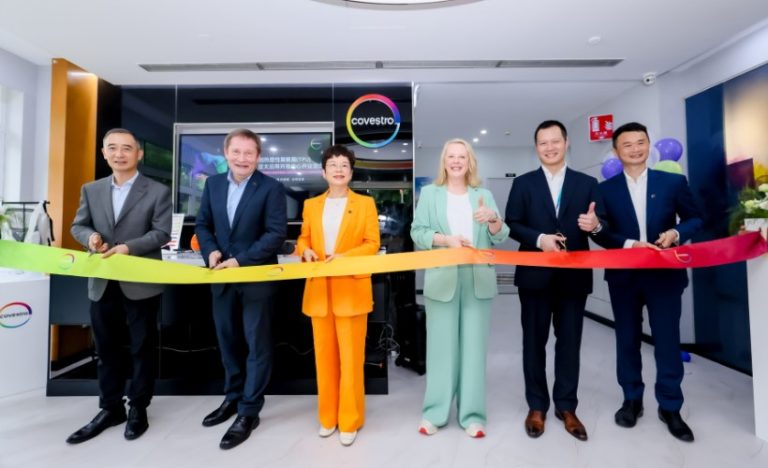
The new Covestro TPU Application Development Center in Guangzhou — designed to co-create tailored material solutions with customers at the heart of South China’s most dynamic industries.
A distinctive feature of the Guangzhou AD Center is its multi-business setup, with Engineering Plastics (EP) and Specialty Films (SF) teams co-located on the same site, enabling close collaboration and faster integration of capabilities. The EP unit brings compounding expertise and color competence, supporting in-house color matching for applications such as consumer electronics, footwear and paint protection films (PPF). The SF unit enables pilot production and finished product commissioning for high-performance films and other extrusion-based applications. This integrated approach brings together capabilities across business entities, creating added value for customers.
“Innovation at Covestro is led by our markets and always strives to combine our global strengths across the business entities for our customers,” said Dr. Christian Haessler, Head of Global Innovation TPU at Covestro. “TPU is a material for a more sustainable future, and the Guangzhou AD Center will enable the development of highly versatile and recyclable TPU material solutions in one of the most dynamic innovation ecosystems worldwide.”
The Guangzhou AD Center is now open for customer and partner collaboration across Asia-Pacific, offering end-to-end customer support from initial material consultation to pilot production and troubleshooting.
Glasstec 2026 Begins Countdown With Ticketshop Launch And Event Preview
From the glasstec conference to “glass technology live” to new formats such as Women in Glass: the world-leading trade fair will provide a market overview, address future issues and enable practice-oriented knowledge transfer related to the Hot Topics Decarbonisation, Circular Economy and AI & Digital Technologies.
glasstec 2026 continues to pick up speed as ticket sales start: from 20 to 23 October 2026 Düsseldorf will again become the meeting point for the international glass sector. Centrestage will be solutions for the industry’s key questions of the future – from decarbonisation, circular economy, AI and digital technologies to resilient and security-critical glass solutions.
The glasstec conference 2026 will form the centrepiece of the lecture programme pooling the know-how of the international glass sector from industry, science and research.
industry, science and research.
glasstec conference
The proven formats of the glasstec conference include the glass trends sessions, CircuClarity Two, the glass melting pot as well as the Start-Up Sessions. These will be complemented by the integrated architecture forum where renowned architects’ offices will introduce projects for building skins and structural glass applications. Launching Women in Glass glasstec 2026 will extend its offering to include a new format that creates visibility for female expertise and promotes exchange within the industry.
For the first time, the special show “secure – innovative – sustainable” will be staged in cooperation with ift Rosenheim. It will focus on resilient and security-critical glass solutions especially for critical infrastructure.
Playing a key role again will be glass technology live, considered the platform for forward-looking glass applications that presents innovations on the verge of market-readiness.
Hands-on insights will also be provided by the Handwerk Live activities of the Federal Association of Glazier Trades (BIV).
This offering is complemented by the special show glass art, which showcases the creative diversity of this material.
glass technology live (gtl)
Daniel Feische, Director of glasstec, emphasises:“glasstec 2026 not only shows what is feasible in technical terms but above all where the glass sector is headed. Our programme of accompanying events stages the decisive questions of the future – from decarbonisation and circular economy to AI and secure and resilient glass solutions. With this we provide guidance, exchange and concrete impulses for investment decisions.”
Visit glasstec 2026 in Düsseldorf from 20 to 23 October and experience how the glass industry masters tomorrow’s tasks.
FIMIC Expands Melt Pump Portfolio With Advanced Recycling Technologies
Pressure instability represents one of the main causes of inefficiency in plastics recycling, often resulting from the combination of material variability and line configuration. Variations in material quality, high contamination levels, and non-optimized process setups generate inherently unstable operating conditions.
Managing these fluctuations typically requires the use of gear pumps; however, conventional technologies are highly sensitive to contamination, limiting their effectiveness in more demanding applications. Traditional gear pumps require a pre-filtration system to prevent damage caused by contaminants and, even with such systems in place, maintenance remains frequent, leading to production downtime that can last several days over the course of a few months.
Developing efficient and economically sustainable solutions is no longer an option, but a necessity to remain competitive.
This challenge can be addressed through solutions specifically designed to handle variable feeding conditions. In this context, FIMIC – globally recognized for its expertise in self-cleaning filtration systems – introduces two new pumping technologies: the RMP – Recycling Melt Pump and the FPP – FIMIC Piston Pump.
These solutions are designed to improve the efficiency and reliability of extrusion lines processing recycled materials, with a strong focus on reduced maintenance requirements and operational continuity.
Together with the established SPA screw pump technology, these innovations expand FIMIC’s portfolio, enabling the company to respond to a wide range of process conditions and applications. This further strengthens FIMIC’s commitment to developing integrated, tailored solutions for the ever-evolving challenges of plastics recycling.
These innovations will be officially presented at PLAST 2026, in Milan, from June 9 to 12, at booth D48 D50.
RMP: stable output and precise control for more efficient recycling extrusion
The RMP (Recycling Melt Pump) ensures consistent output in applications where stability and control are essential.
Its gear pump design provides a fixed and predictable material flow, allowing the extrusion process to be decoupled from upstream and downstream fluctuations.
The system ensures a constant throughput and greater product uniformity, while enabling more precise control of the extrusion process and improved production repeatability. Its modular design also enhances operational efficiency by allowing quick maintenance interventions, reducing downtime and ensuring production continuity.
The gear module can be quickly replaced without removing the pump from the line, further minimizing downtime and simplifying maintenance operations.
FPP: a piston-based approach to improve process stability
The FPP (FIMIC Piston Pump) is designed to address the main causes of instability in extrusion processes in recycling, particularly when processing variable and contaminated materials.
Its dual-cylinder system with synchronized pistons ensures continuous and controlled pressure, even under highly variable conditions, improving the overall efficiency of the line.
This results in reduced pressure fluctuations, a more consistent material flow, and minimized pulsation effects, contributing to greater stability in downstream operations. The system also ensures reliable operation with heterogeneous or contaminated materials and allows high pressure levels to be reached without compromising process control.
Overall, the FPP enhances process stability, flow continuity, and supports more reliable production even under the most demanding recycling conditions.
A complete pump portfolio for different recycling scenarios
With the introduction of FPP and RMP technologies, FIMIC expands its portfolio by integrating different operating principles to address specific process requirements.
Each technology is designed for a defined application scenario:
• FPP for highly contaminated materials and high-pressure applications
• RMP for stable pelletizing lines with controlled contamination
• SPA for simple and robust applications
FIMIC adopts a targeted approach, selecting the most suitable technology based on the process conditions and the type of material being processed.
As input materials become increasingly complex and performance expectations continue to rise, these new solutions enable improved process stability, reduced downtime, and enhanced overall production efficiency.
The launch of the RMP and FPP pumps reflects FIMIC’s ongoing commitment to innovation in plastics recycling technologies. By combining advanced melt filtration systems with specialized pumping solutions, the company continues to develop integrated technologies designed to simplify recycling processes and improve operational performance.
With these innovations, FIMIC strengthens its role in supporting recyclers worldwide in managing complex materials and transforming them into valuable resources within the circular economy.
YouTube is one of the most influential platforms in modern media, but its origin story is surprisingly simple: a small team wanted an easier way to share video online. In the early 2000s, uploading and sending video files was slow, formats were inconsistent, and most websites weren’t built for smooth playback. YouTube’s founders focused on removing those barriers—making video sharing as easy as sending a link.
Who Founded YouTube?
YouTube was founded by three former PayPal employees: Chad Hurley, Steve Chen, and Jawed Karim. They combined product thinking, engineering skills, and a clear user goal: create a website where anyone could upload a video and watch it instantly in a browser.
Chad Hurley — product/design focus and early CEO role
Steve Chen — engineering and infrastructure
Jawed Karim — engineering and early concept support
The Problem YouTube Solved
At the time, sharing video often meant emailing huge files or dealing with complicated players and downloads. YouTube made video:
Uploadable by non-experts (simple interface)
Streamable in the browser (no special setup)
Sharable through links and embedding on other sites
Early Growth and the First Video
YouTube launched publicly in 2005. One of the most famous early moments was the first uploaded video, “Me at the zoo,” featuring co-founder Jawed Karim. The clip was short and casual—exactly the kind of everyday content that proved the platform’s big idea: ordinary people could publish video without needing a studio.
Key Milestones Timeline
Year/Date
Milestone
Why It Mattered
2005
YouTube is founded and launches
Introduced easy browser-based video sharing
2005
“Me at the zoo” is uploaded
Became a symbol of user-generated video culture
2006
Google acquires YouTube
Provided resources to scale hosting and global reach
Why Google Bought YouTube
By 2006, YouTube’s traffic was exploding. Video hosting is expensive—bandwidth and storage costs rise fast when millions of people watch content daily. Google’s acquisition gave YouTube the infrastructure and advertising ecosystem to grow into a sustainable business.
What YouTube’s Founding Changed
YouTube didn’t just create a popular website; it reshaped how people learn, entertain themselves, and build careers online. Its founding helped accelerate:
Creator-driven media and influencer culture
How-to education and free tutorials at massive scale
Music discovery, commentary, and global community trends
From a small startup idea to a global video powerhouse, YouTube’s founding is a classic example of a simple product solving a real problem—and changing the internet in the process.
Flexipet Introduces Cutting-Edge Extrusion Line For PET Thermoforming Sheets
SML announces the launch of the FlexiPET, a brand-new production-scale demonstration line for thermoforming sheet located at SML’s Technology Centre. The sheet extrusion line features a completely redesigned machine architecture, and delivers smart innovations at every level: most notably SML’s new twin-screw extruder TSE80 for polyester, a modernised roll stack, and the new W650 winder.
The FlexiPET is a co-extrusion sheet line configured for a classic 3-layer structure (A/B/A), but which also has the versatility to operate as a 2-layer line (A/B) as required.
Extrusion excellence: TSE 80 combined with high-performance vacuum unit
“At the heart of the line lies the new TSE 80 – a state-of-the-art parallel co-rotating twin-screw extruder designed in-house by SML and specifically optimised for PET,” explains Martin Kastner, R&D Engineer at SML. Equipped with a low-maintenance, water-cooled main drive delivering 348 kW, the TSE 80 achieves an output capacity of up to 1000 kg/h for PET.
The TSE 80 demonstrates exceptional material versatility. It is optimised for processing large volumes of materials with low bulk densities – such as flakes or regrind. The concept is also an excellent choice for processing PET/PE flakes, as well as PETG and its post-industrial flake stream (GAG). With its compact design, the TSE 80 ensures high rates of energy efficiency. In addition, the short residence time in the extruder retains the natural, clear colour of PET, preventing the yellowing of the film.
To ensure the highest melt quality for processing PET without pre-drying, the TSE 80 is combined with SML’s high-performance vacuum unit. This frequency-controlled two-stage vacuum system employs a roots vacuum pump for high volume flow rates with a dry-running rotary screw pump for low pressure levels. This configuration achieves absolute pressure levels as low as 1 mbar. Due to the dry-running vacuum pumps, the unit ensures high levels of energy efficiency and environmental compatibility.
A gravimetric batch blender with three stations for main components (virgin, flakes, regrind) and two additive dosing stations offers expectional flexibility for complex formulations.
The co-extruder in the FlexiPET line is an SML single-screw extruder (ES 60/28D) powered by a 64 kW main drive motor. It is designed for processing pre-dried material with an output of up to 200 kg/h for PET.
Precision calendering
Downstream, the horizontal roll stack ensures a high specific output, even for thin gauges as low as 150 µm. It uses the proven Smart Parallel Gap (SPG) polishing roller technology for superior thickness tolerances. “A major innovation is the roll stack movement, equipped with servo positioning drives and linear guides, which enables precise, 100 % reproducible positioning in both the horizontal and vertical directions,” Martin Kastner continues. This feature includes automatic start-up processes, collision protection between the roll stack and flat die, and the ability to store production positions in the SMILE control system. The design complies with Calander standard DIN EN 12301-2021-12, ensuring safety without affecting the visibility of the smoothing roller gap.
W650: new winder for thermoforming film
The FlexiPET concludes with the new W650 winder, a development that combines the best of two worlds. It offers the user-friendly roll handling of a cantilever winder – where the shaft remains in place during changes – combined with the large winding capacities of an A-frame winder (diameters of up to 1,500 mm and 2,000 kg roll weight). A movable winding shaft support ensures the production of perfectly straight-edged reels.
The W650 basic version also includes semi-automatic cantilever operation with automatic cross-cutting via flying knife. Energy-efficient asynchronous servo motors with resolver feedback, combined with SML’s in-house winding controller, enable precise winding from the first layer. The W650 is fully modular and can be upgraded with optional modules for specific requirements, such as FFS winding or the processing of two webs on a single shaft. All these modules are currently installed on the demonstration line at SML’s Technology Centre.
RAKEZ Drives Industrial Innovation And Investment Growth Through Strategic Alliances
In the presence of HH Sheikh Saud bin Saqr Al Qasimi, UAE Supreme Council Member and Ruler of Ras Al Khaimah, Ras Al Khaimah Economic Zone (RAKEZ) signed two strategic agreements – with MAGRABi Retail Group and Mighty Industrial Park – during the 5th edition of Make it in the Emirates (MIITE), held at ADNEC Centre in Abu Dhabi, reinforcing the emirate’s growing position as a competitive hub for industrial investment and advanced manufacturing.
The agreements reflect increasing investor confidence in Ras Al Khaimah’s industrial ecosystem and its ability to support long-term, scalable manufacturing operations.
The first agreement, represented by MAGRABi Retail Group CEO Yasser Taher, aims to establish a Store Manufacturing Centre – a purpose-built facility dedicated to the production of furniture, store fit-outs, refurbishments, and pop-up concepts across its retail network. Designed to service up to 140 stores annually, the facility will support MAGRABi Retail’s operations across all its markets in the GCC, while creating up to 100 jobs and strengthening the company’s regional expansion and operational capabilities.
Taher said, “At MAGRABi Retail, everything we do is driven by a customer-first philosophy. This investment reinforces our long-term commitment to the Emirate of Ras Al Khaimah while enabling us to further elevate the retail experience across our growing network. By centralising the production of our store environments, we ensure that every detail reflects our dedication to quality, innovation, and client care.”
The second agreement was concluded with Mighty Industrial Park, represented by shareholder Guichun Guo, setting plans for the development of a comprehensive China-UAE industrial park. The project will focus on metal recycling, dismantling, smelting, precious metal refining, and advanced manufacturing, creating a fully-integrated ecosystem that supports sustainable industrial development and sector growth, while contributing to the advancement of circular economy practices within Ras Al Khaimah.
Guo said, “Ras Al Khaimah was chosen by Mighty Industry Park because it offers the practical conditions required for a resource-circulation industrial project to scale: industrial land, utility access, logistics connectivity and a manufacturing environment that can support recycling, refining, production, and export activities. RAKEZ provides a platform where our secondary copper recycling, refining, and copper products manufacturing operations can be developed as an integrated industrial chain rather than as a single standalone facility. With support from the relevant authorities during the establishment process, we see Ras Al Khaimah as a long-term base for building a circular-economy value chain, attracting upstream and downstream partners, and contributing to the UAE’s green manufacturing and industrial diversification goals.”
Commenting on the agreements, RAKEZ Group CEO Ramy Jallad said, “These two agreements reflect our ongoing commitment to strengthening Ras Al Khaimah’s position as a leading hub for advanced manufacturing and industrial investment in the region. By partnering with prominent companies such as MAGRABi Retail and Mighty Industrial Park, we are committed to developing an integrated industrial ecosystem that supports innovation and keeps pace with global shifts in value chains and sustainable manufacturing. At RAKEZ, we continue to provide a flexible and enabling business environment that allows investors to expand with confidence, benefit from advanced infrastructure, and access integrated services that support their long-term growth.”
In addition to these milestones, Jallad took part in a high-level panel discussion alongside leaders from the UAE’s free and economic zones. During the session, he highlighted the UAE’s strong industrial resilience, driven by alignment of efforts across federal entities and economic zones, and reinforced by practical, on-the-ground support for businesses. He noted that flexibility, close client engagement, and integrated ecosystem support have been key to maintaining continuity, while long-term investor confidence continues to be built on stability, scalability, and the ability to grow seamlessly within the same environment.
When asked about long-term commitments from global manufacturers, he said, “Certainty remains the key — enabled by a stable environment, seamless scalability within one ecosystem, and integrated access to logistics, financing, and global markets, allowing businesses to grow with confidence over the long term.”
This direction aligns closely with the UAE’s Operation 300bn strategy, with RAKEZ contributing by enabling industrial growth, attracting high-value manufacturing investments, and providing the infrastructure and ecosystem required for businesses to scale within the country.
Through its continued participation in major platforms such as MIITE, RAKEZ reinforces this role by creating an environment where businesses can grow with confidence, expand seamlessly, and navigate evolving global conditions while contributing to the UAE’s long-term industrial and economic ambitions.
Evonik Strengthens Innovation In Electrical Materials With New China Laboratory
Evonik has announced the opening of its PEEK Rectangular Magnet Wire Lab during an inaugural ceremony at the CHINAPLAS international exhibition for the plastics and rubber industry.
Lab focuses on developing PEEK solutions for new energy vehicle (NEV)components
Facility to foster further collaboration with customers in new product development and qualification customers accelerate new product development and qualification NEVs are hybrid-electric or fully electric-drive vehicles, and are a growing regional and global market
Focus areas include magnet wire extrusion, research and reliability testing, and PEEK wire coating safety testing
Evonik has announced the opening of its PEEK Rectangular Magnet Wire Lab during an inaugural ceremony at the CHINAPLAS international exhibition for the plastics and rubber industry. Built to serve the needs of major Chinese and Asian markets, the lab will focus on research and innovation for polyether ether ketone (PEEK) powder-based applications for electric motors, especially for new energy vehicles , which are hybrid-electric or fully electric-drive vehicles, and constitute a growing segment of the regional and global automotive market.
“The NEV industry chain in China and across Asia Pacific is rapidly moving upmarket and globalizing, raising the bar for performance limits and delivery speed of critical materials,” said Jinhong Zhang, Vice President and General Manager of Evonik’s Asia-Pacific region, High Performance Polymers business line. “This lab will support our work with partners to advance the large-scale adoption of VESTAKEEP PEEK solutions in electric-drive systems, magnet wires, and equipment. The aim is to further develop our range of VESTAKEEP PEEK solutions to withstand even higher temperatures, higher voltages, and more demanding operating conditions—and as such, provide strong support for improved efficiency and enhanced reliability of NEV electric-drive systems.”
Among other tasks, the Evonik PEEK Rectangular Magnet Wire Lab will focus on key technical challenges in magnet wire applications, including processing-parameter optimization, coating-structure design, improved adhesion performance, and control of dimensions and concentricity. In collaboration with third-party organizations, the
lab will carry out reliability tests on key electrical properties such as breakdown voltage (BDV), partial discharge inception voltage (PDIV), corona resistance, and oilaging resistance, providing material assurance for safe, long-term operation of NEV electric-drive systems. The lab will also be used for sample preparation, validation of new PEEK formulations, and benchmarking against standard products, helping customers accelerate new product development and qualification.
As NEV drive systems evolve toward higher power density, higher efficiency, and greater reliability, magnet wires used in motors place increasingly stringent requirements on heat resistance, electrical performance, and long-term stability of insulation materials.
“By establishing this magnet wire application laboratory, Evonik lays the foundation hopes to work more closely with customers and value-chain partners,” said Felix Teng, Director of Innovation Management in Evonik’s Asia-Pacific region, High Performance Polymers business line. “Our aim is to translate the material performance advantages that VESTAKEEP PEEK has in motor magnet wire applications into full-system solutions that can be verified through testing and scaled up for mass production.”
The Evonik PEEK Rectangular Magnet Wire Lab is set up to cover the full process chain, from copper conductor pretreatment and PEEK extrusion coating to in-line dimensional inspection and final winding. Additionally, the new pilot extrusion line uses internationally leading core components and is designed and integrated locally, combining high quality and high reliability with flexibility.




 The organization’s commitment to preventing microplastic pollution has led the company to place particular emphasis on the implementation and certification of the Operation Clean Sweep (OCS) program. Thanks to this approach, Molecor has anticipated new